




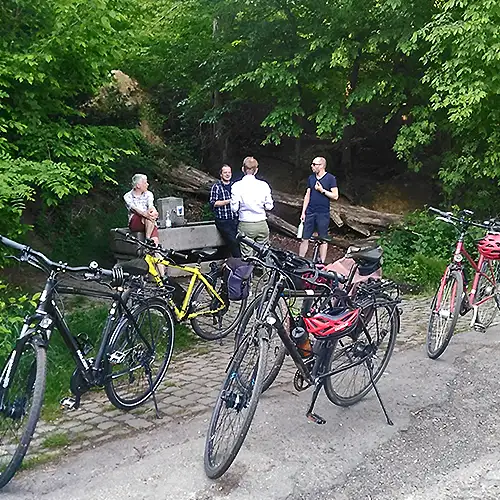

Wiesbadener Radstern – Safe secondary route network with bicycle roads
The ADFC Wiesbaden/Rheingau-Taunus demands: Safe secondary route network with bicycle roads
We want to make Wiesbaden a city for cyclists. Everyone should be able to cycle safely and comfortably.
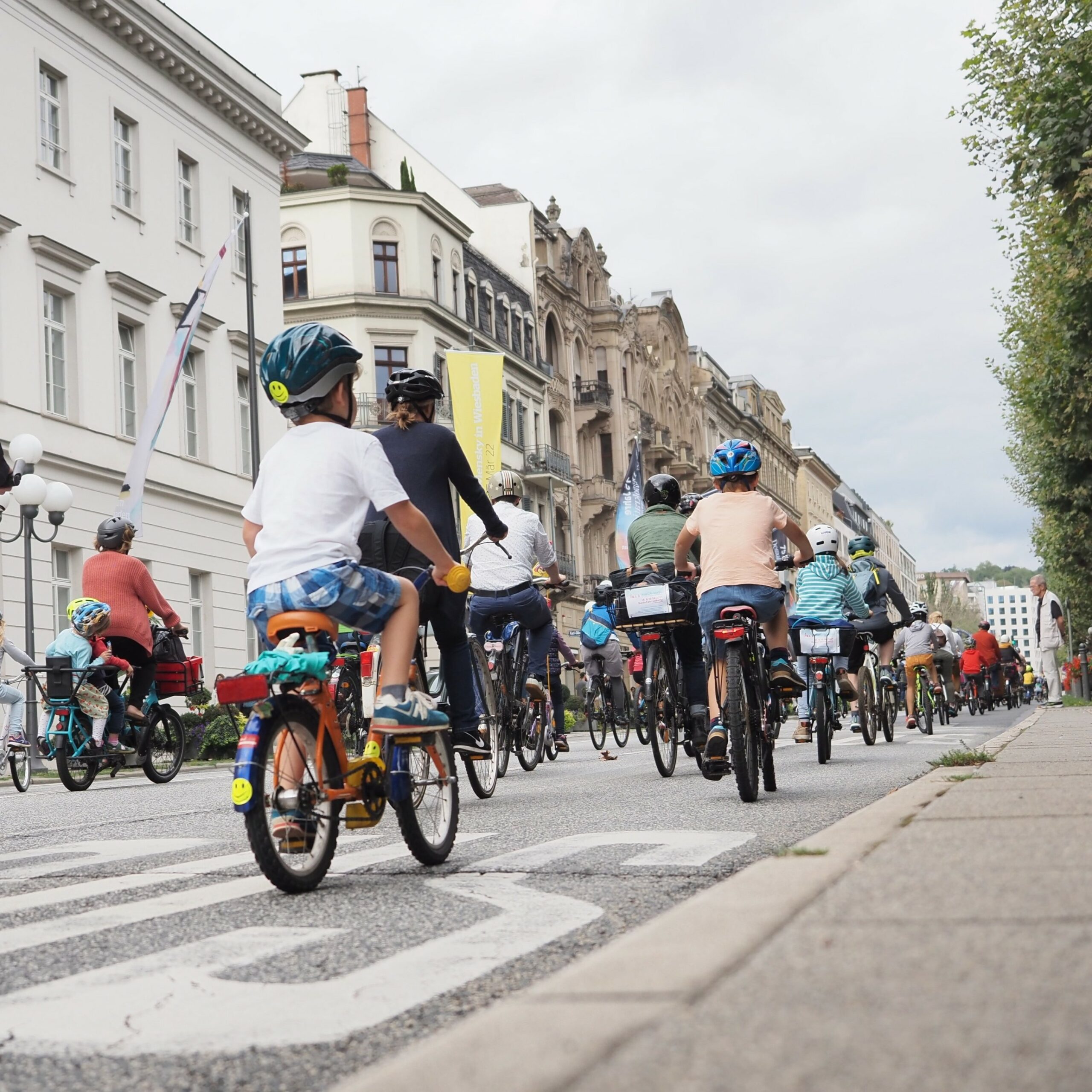
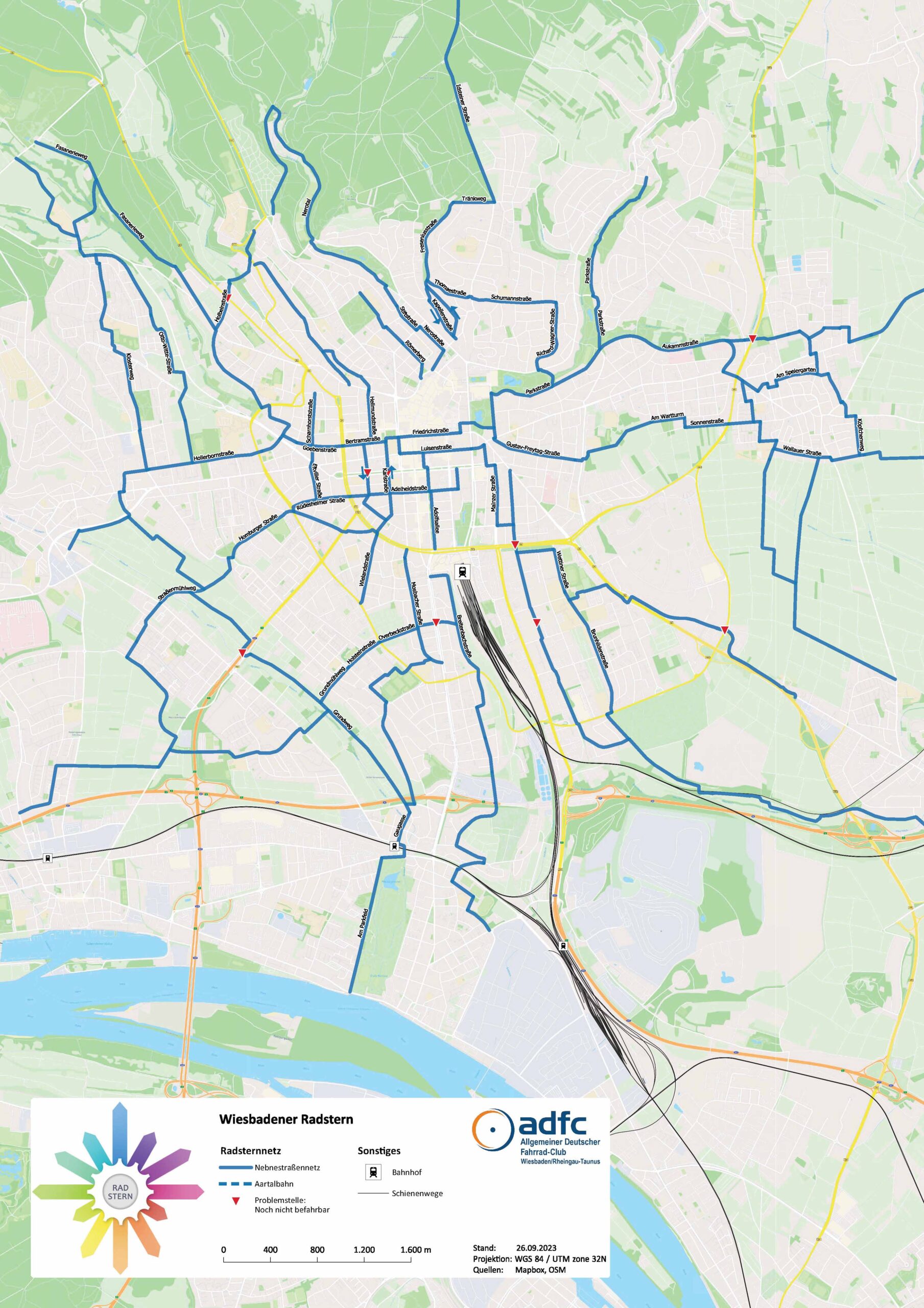
Therefore, the AG cycling policy of the ADFC Wiesbaden/Rheingau-Taunus has drawn up a plan for a safe secondary route network in Wiesbaden. The routes of the Radstern offer the possibility to reach the different corners of Wiesbaden quickly and directly, far away from the roads, which are mostly confiscated by car traffic. Therefore, they are suitable to be used mainly by cyclists in the future.
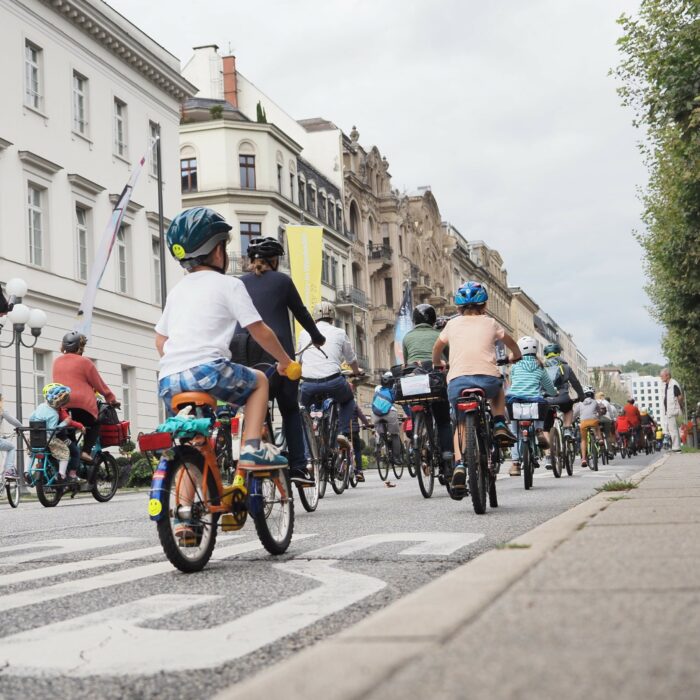
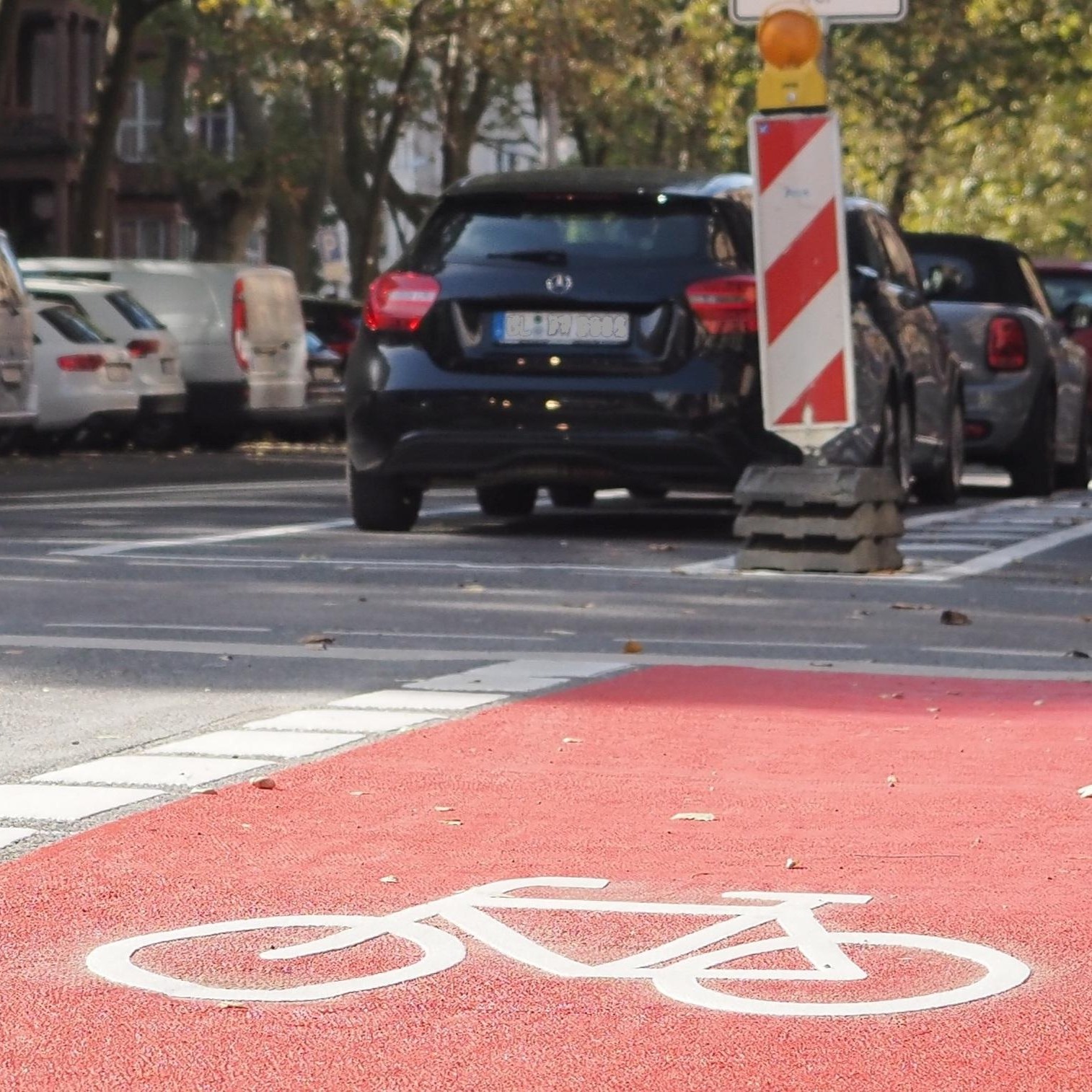
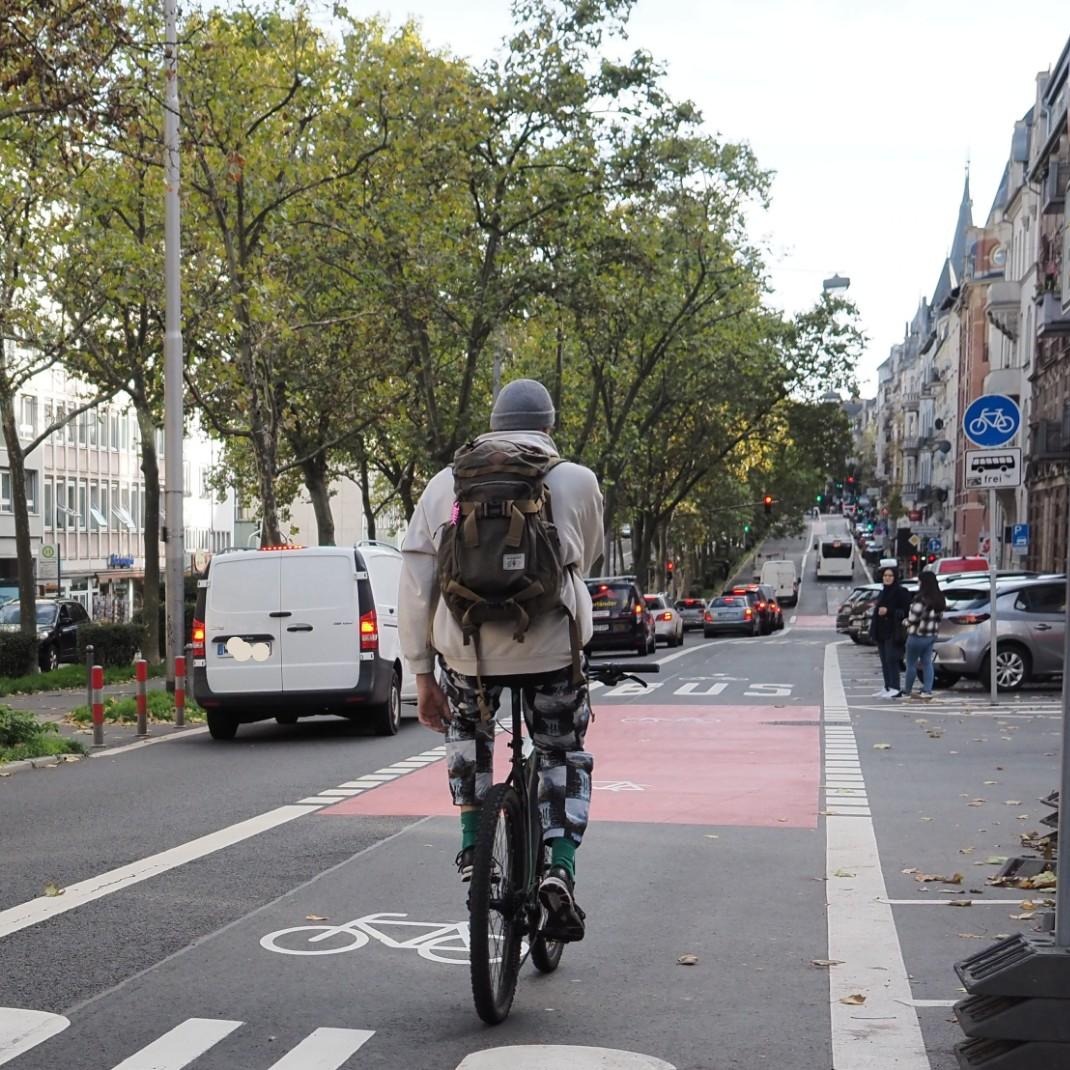
We are calling for these roads to be repurposed as bicycle roads. We want children there to be able to cycle protected and seniors can cruise relaxed.
If one imagines Wiesbaden as the dial of a clock, then there should be a path starting from the center for every hour. The route is therefore roughly star-shaped, preferably also with cross connections.
© Jan Schlotter
Where should the bicycle network go?
- It should run as far away as possible from the main roads as a secondary road network.
- The network provides direct and continuous connections.
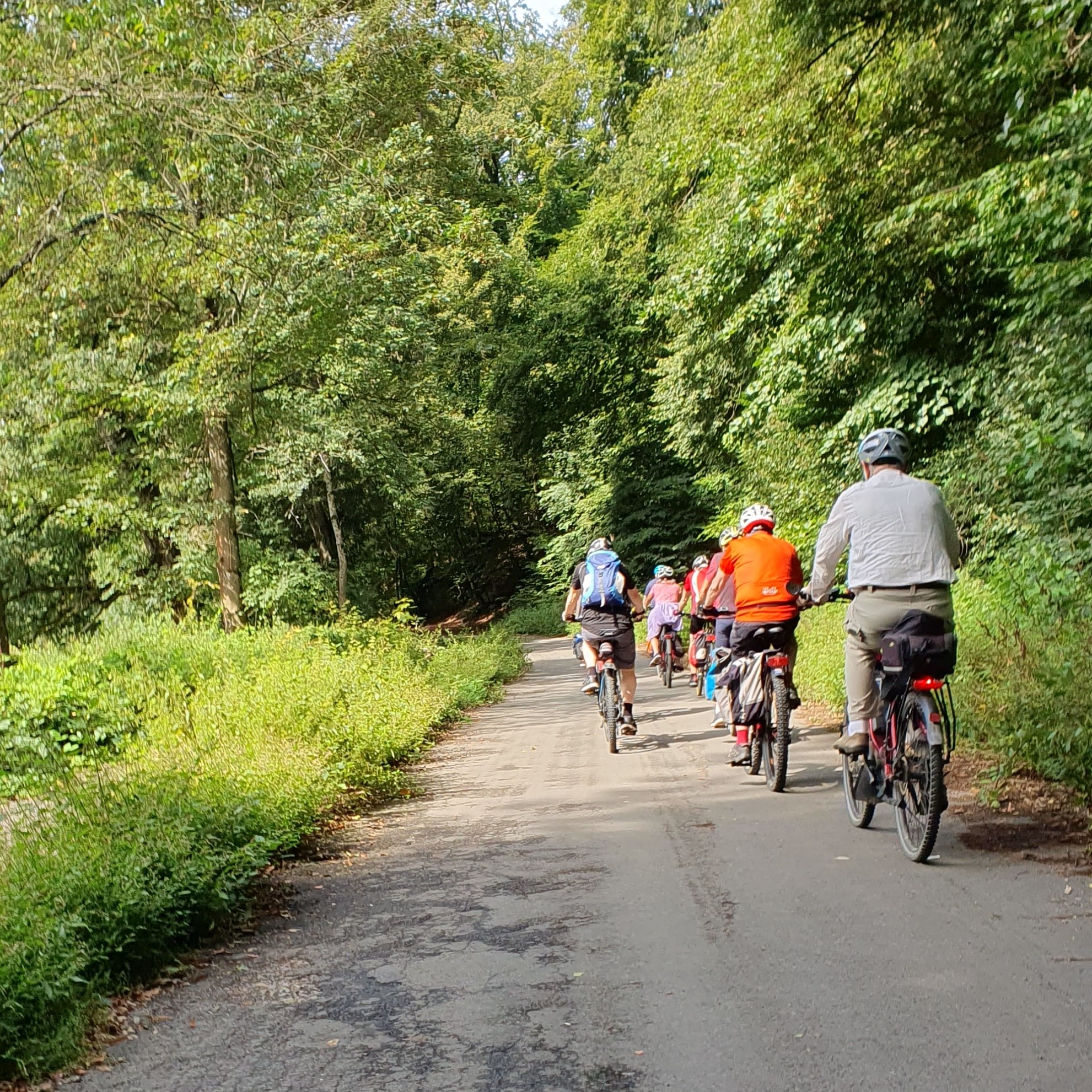
- It leads from the center towards the suburbs and into the green.
- A secure connection to the neighbouring towns is sought.
- The lowest possible gradient is sought.
How is the bicycle road network designed?
- It has a uniform, comprehensible and recognisable standard.
- The Wheel star is similar to the Cyclist shown in the signage. Network gaps are systematically closed.
- The road surface is optimized, cobblestones are leveled as much as possible.
- The crossing of main roads should be comfortable.
- If possible, the bicycle roads are laid out according to the RSV-8 model solution (= 4m width and 0.5m separation strips for stationary traffic).
- The bicycle roads are entitled to drive in front of other secondary roads.
- Unlit paths are illuminated.
- The network of cycle paths is signposted accordingly and marked on city cycling maps.
- The network is continuously being developed.
What about cars and buses on the bike lanes?
- Motorised private transport (MIV) is restricted to passenger journeys.
- Only residents with a parking permit can park in the bicycle road network at the designated and correspondingly marked places.
- Delivery zones are designated for commercial traffic.
- The speed is limited to 30 km/h.
- Buses give priority to cyclists, may be replaced or diverted by minibuses.
Who is the bicycle network for?
- The cycle routes should be convenient for cyclists between 9 and 99.
- The focus is on everyday cycling.
- Users of e-scooters as well as roller skaters and skateboarders can also benefit from the safe cycle path network.
Who does ADFC Wiesbaden/Rheingau-Taunus contact?
With this plan, the ADFC addresses political decision-makers and citizens. The traffic police are asked to prevent illegal parking on these routes.
Why is the route of the Aartalbahn on the map?
When renewing the Aartalbahn, it makes sense to plan a parallel cycle path or at least to think of commuter structures with cycling infrastructure at the stops.
What is the legal basis for this?
Current StVO administrative provision ‘To signs 244.1 and 244.2 Start and end of a bicycle road’ (as at 16.11.2021):
‘I. The arrangement of a bicycle road can only be considered on roads with a high or expected high density of bicycle traffic, a high network importance for cycling or on roads of only minor importance for motor vehicle traffic. A high density of bicycle traffic, a high network importance for cycling do not presuppose that cycling is the predominant mode of transport. An expected high density of bicycle traffic can be justified by the fact that this is effected by the arrangement of a bicycle road.
II. Vehicle traffic other than cycling and the transport of small electric vehicles within the meaning of the Electric Small Vehicles Regulation may only be authorised on bicycle roads in exceptional cases by the arrangement of corresponding additional signs (e.g. local traffic). Therefore, before ordering, sufficient consideration must be given to the needs of traffic with motor vehicles not covered by the Small Electric Vehicles Regulation (alternative traffic management).’

 English (US)