

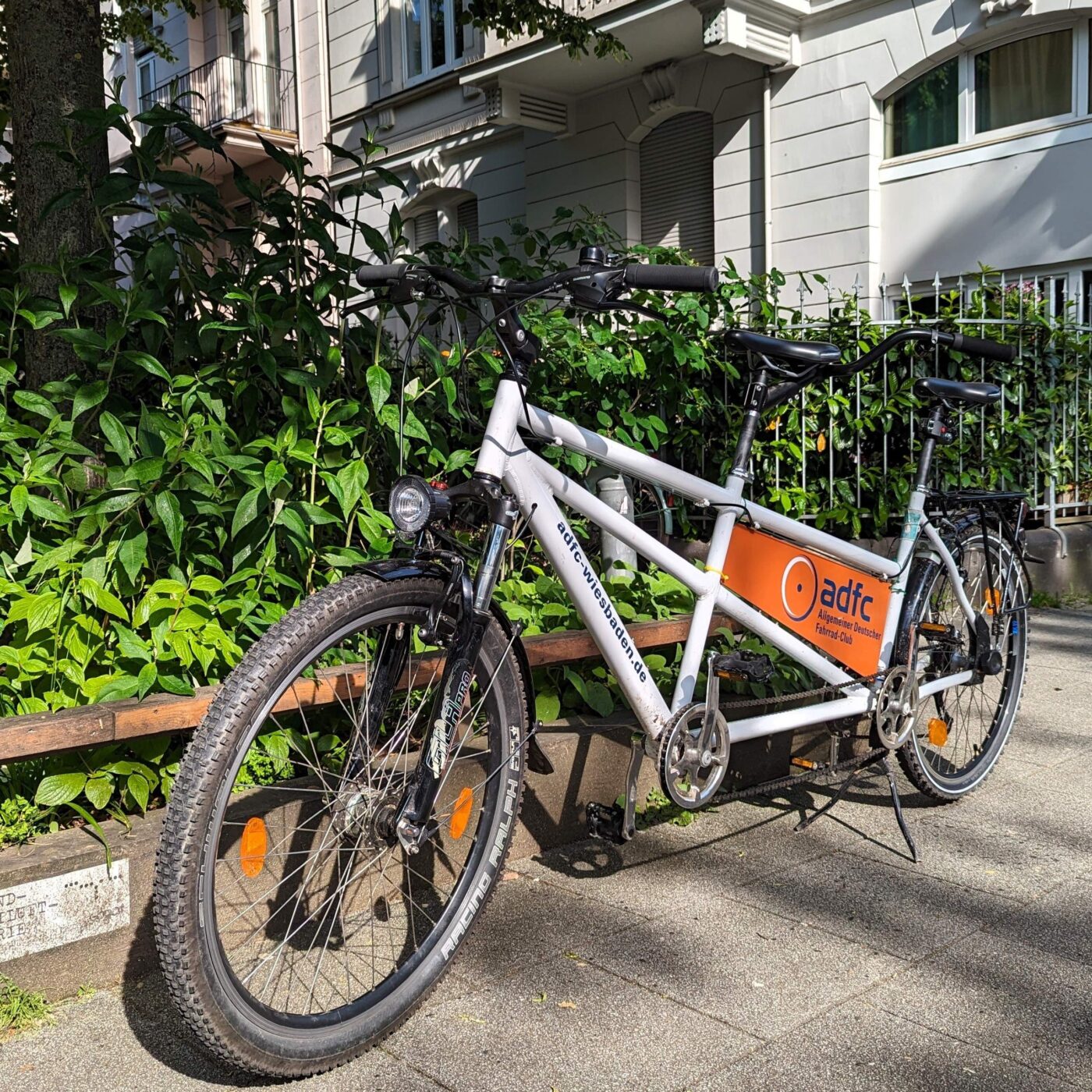
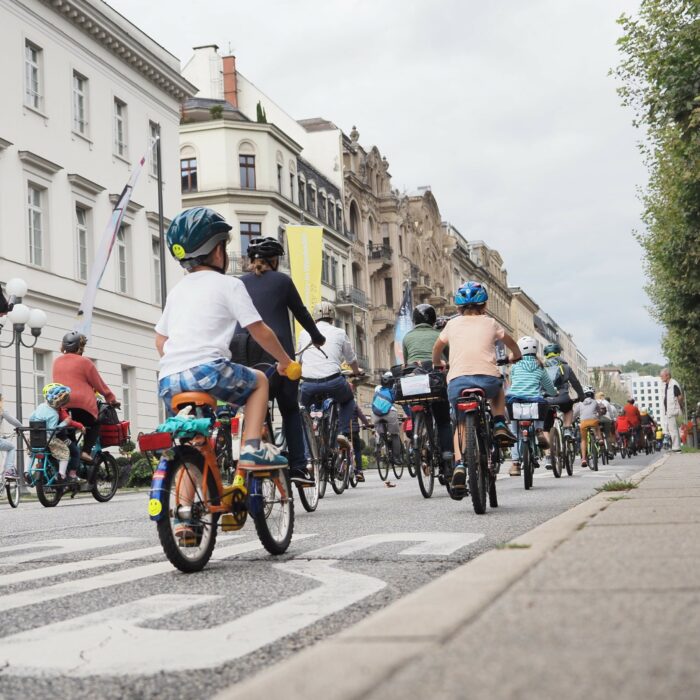
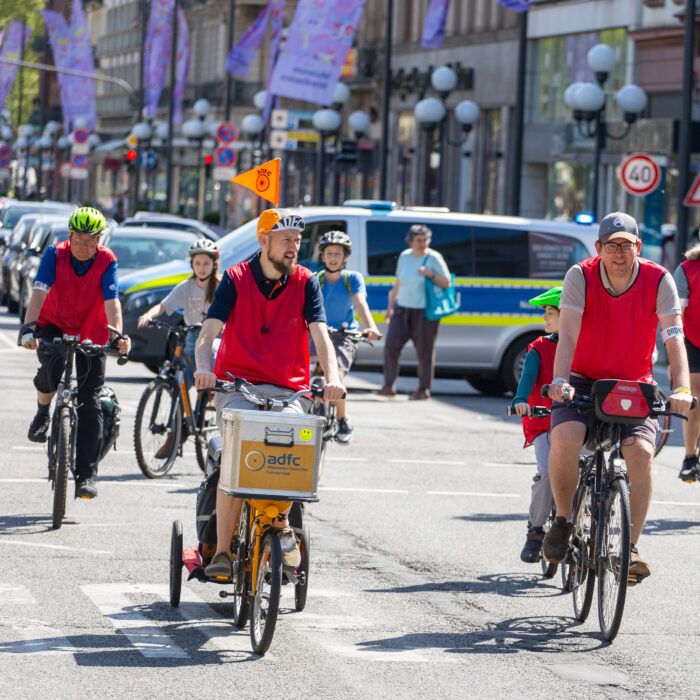
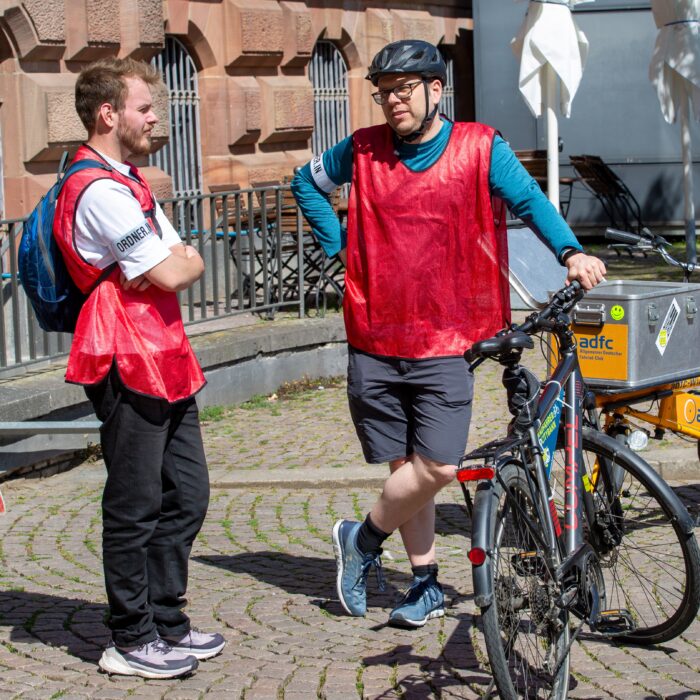




© ADFC | Ollo Keßler
ADFC Cycle Climate Test 2024:
Wiesbaden loses ground again
Cyclists want safe bike paths and a respectful coexistence on Wiesbaden's streets
Wiesbaden, 17.06.2025 | In the nationwide ADFC cycling climate test 2024 Wiesbaden again only ends up in midfield. The cyclists rate the ‘bicycle climate’ in Wiesbaden unchanged compared to 2022 with a ‘smooth four’ (from 3.95 to 3.98). In the category of German cities between 200,000 and 500,000 inhabitants, Hesse's state capital is thus from the 8th to the 11th century. Place (of 25) slipped. Although the field is close to each other, the city of Münster was again able to secure first place in this size class – with a score of 2.97. Krefeld wears the ‘Red Lantern’ with a score of 4.51.
"The ADFC cycling climate test is an important barometer for us for the situation and mood of people who are cycling in Wiesbaden", says Michéle Fleckenstein from the ADFC Wiesbaden/Rheingau-Taunus e.V. Executive Board. In 2022, many respondents perceived the courageously implemented measures for air pollution control and the promotion of cycling as a very positive dynamism. Now, however, the impression prevails that the expansion and modernization of the cycling infrastructure is no longer a priority. "Cyclists also want to be accepted as equal road users", says Fleckenstein.
Three key points of criticism remain unchanged
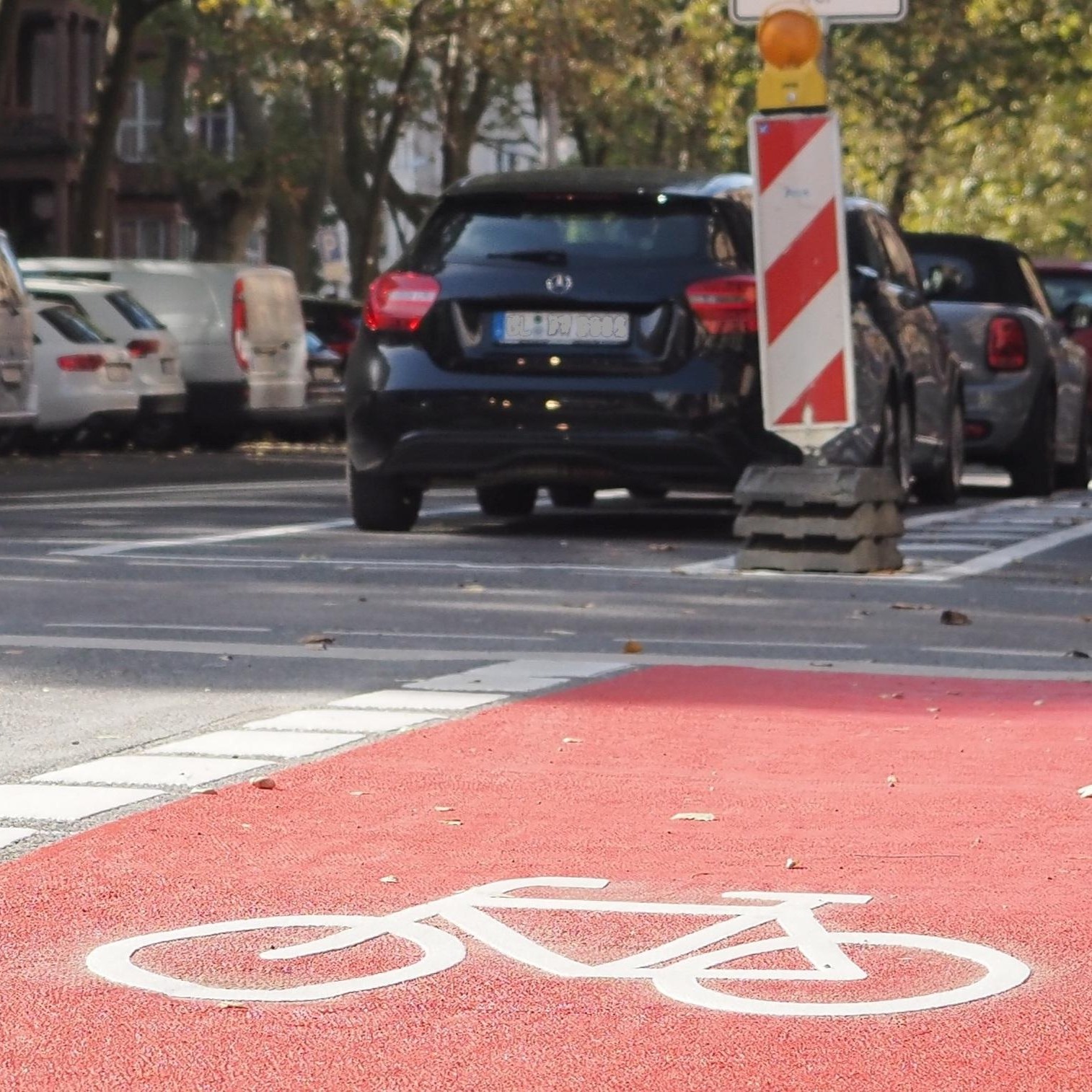
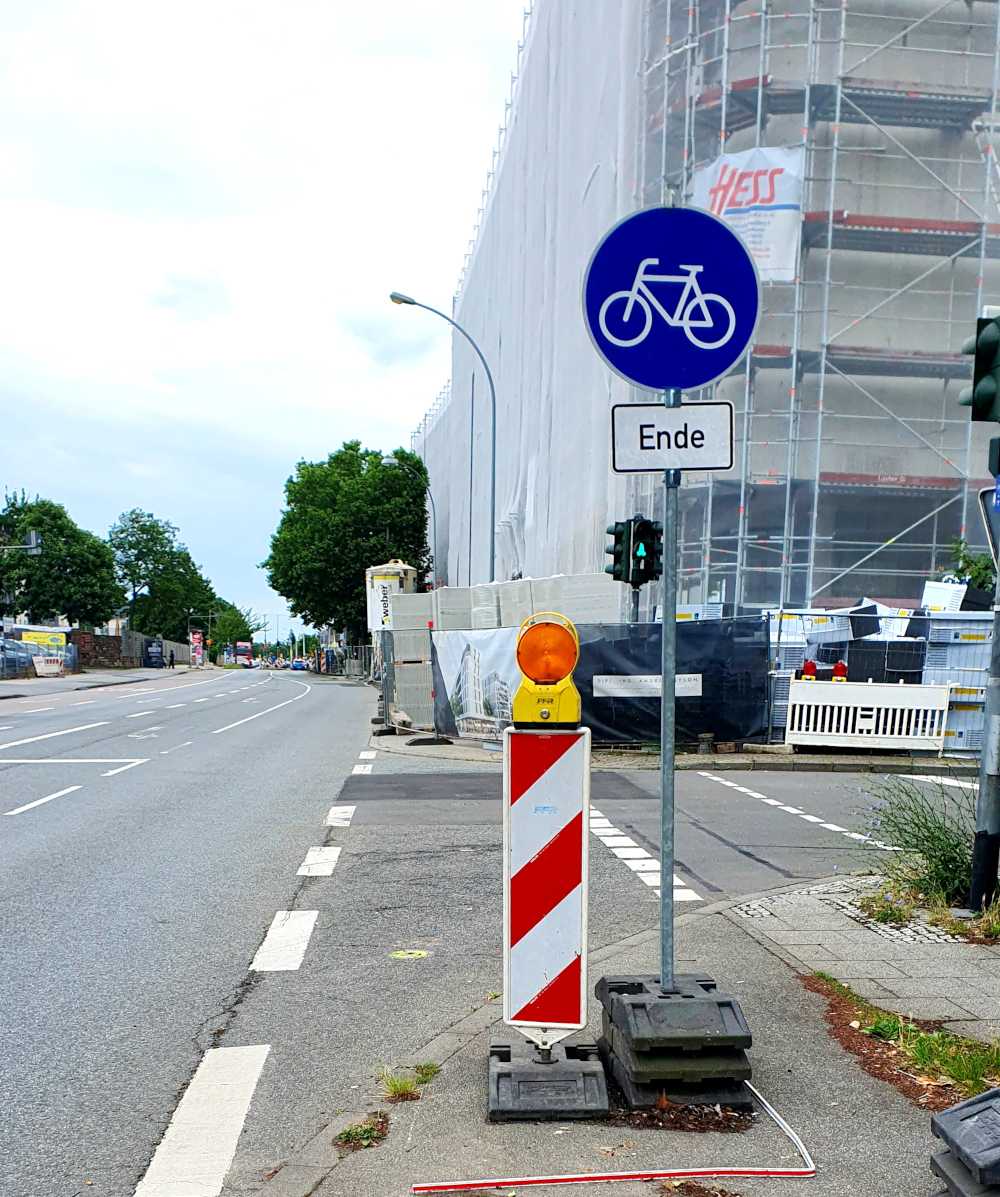
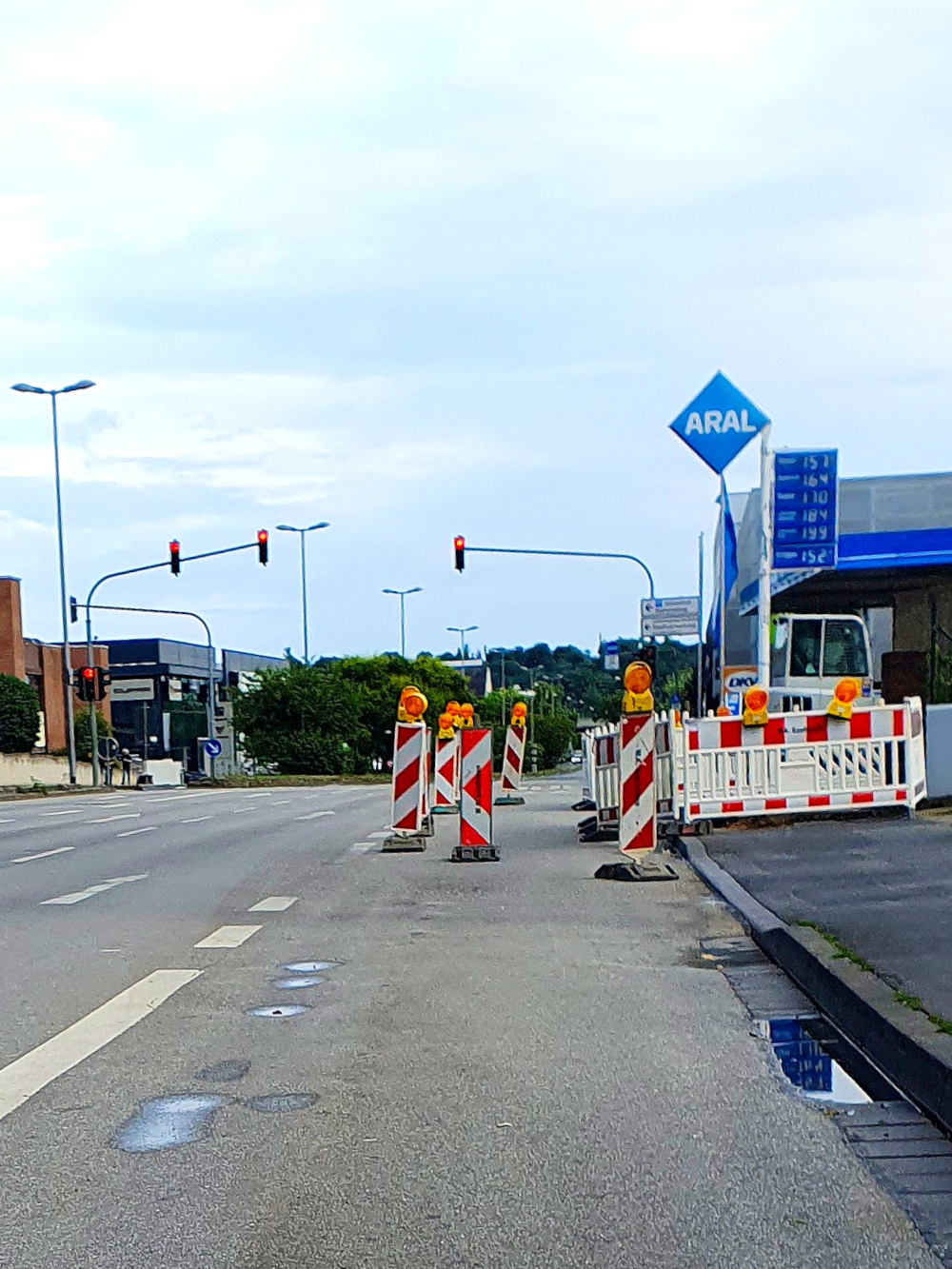
Indeed, the autumn 2024 results show little positive change compared to the last test two years ago. For example, the topics of ‘checks on false parking spaces on cycle paths’, ‘conflicts with motor vehicles’ and ‘guidance for cyclists on construction sites’ are again rated the worst with 4.8 points (on a scale of 1 to 6). Compared to 2022, the ‘Recent bicycle promotion’ and ‘Cycling advertising’ aspects have deteriorated particularly. On the other hand, the fact that most of the one-way streets in Wiesbaden are open to cyclists in the opposite direction is again rated very positively at 1.9 (2022: 2.0).
-
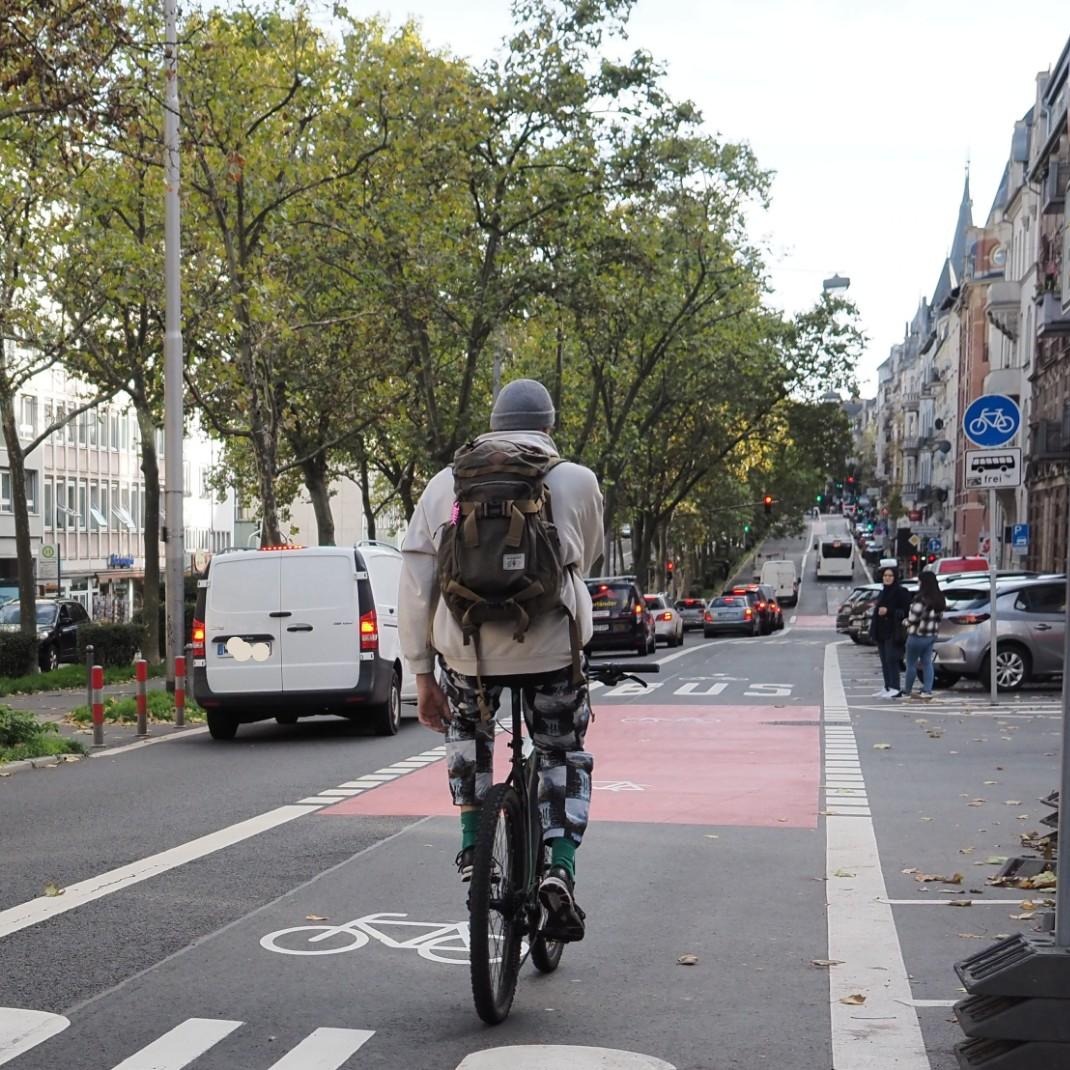
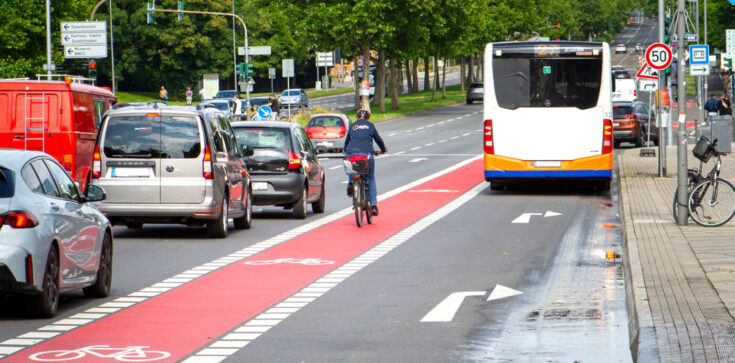
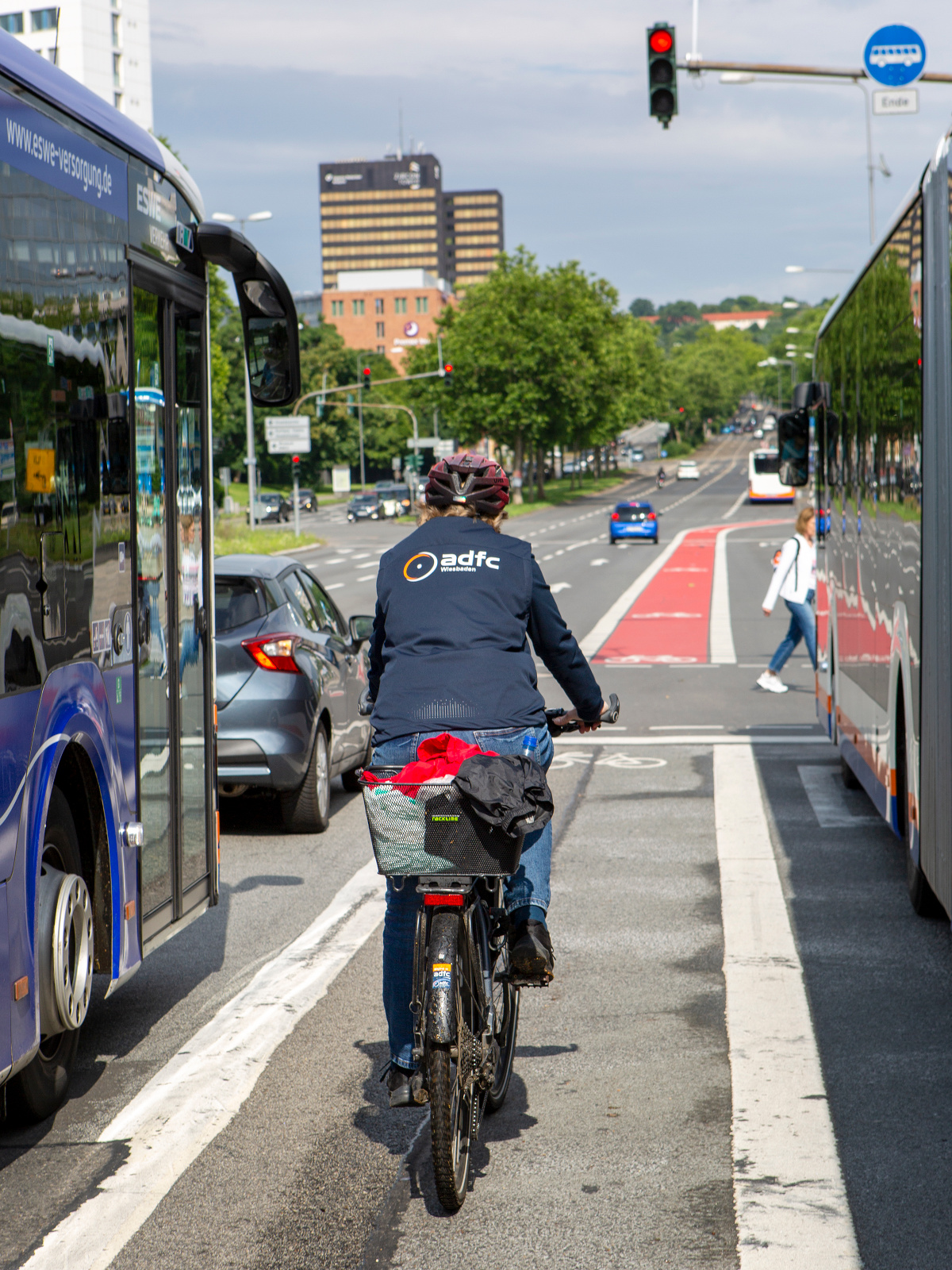
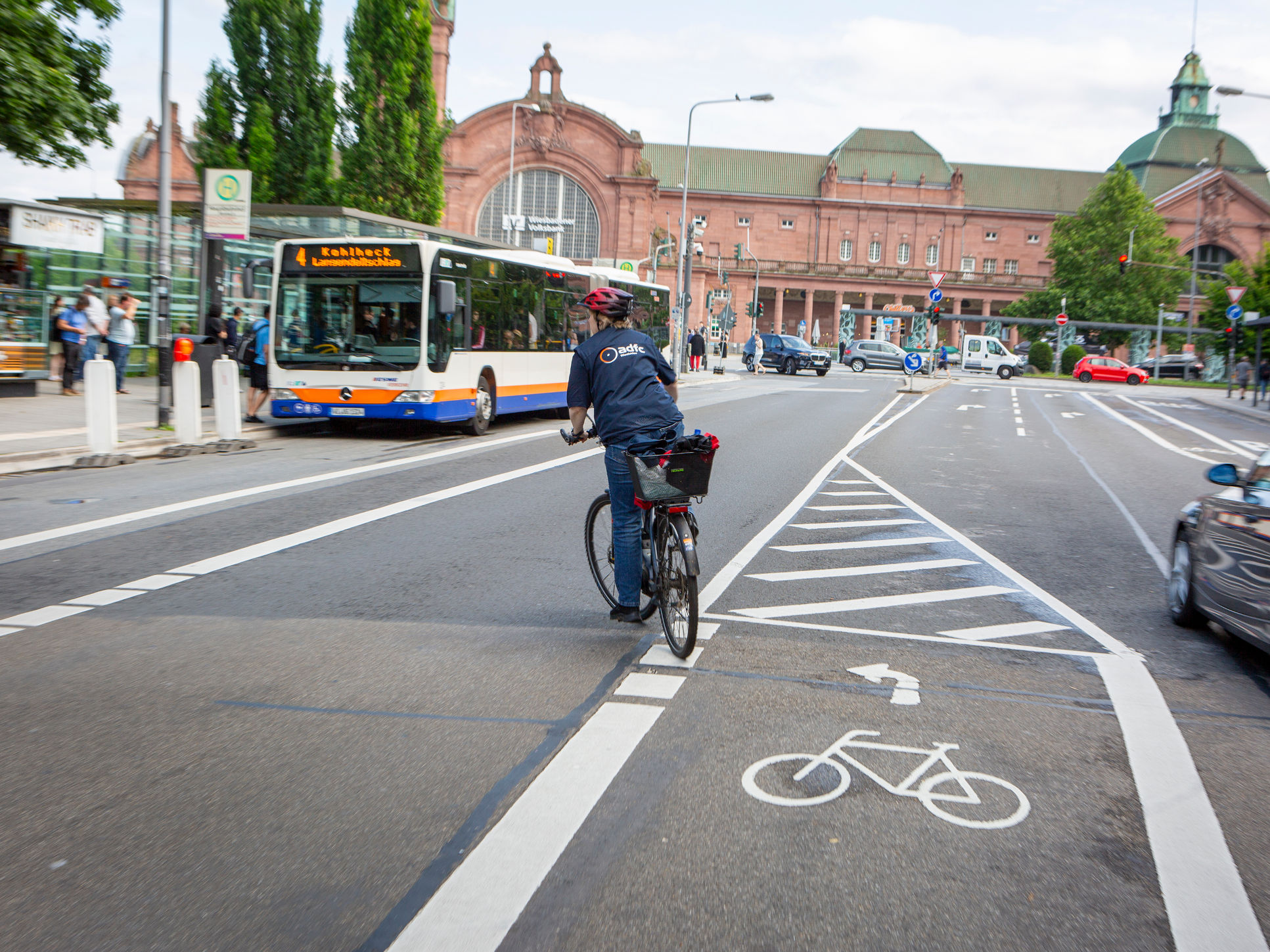
- Feeling of security misrepresentation. The cycle traffic is passed by the main station on a ‘cycle lane in a central position’. © ADFC | Oliver Keßler
-
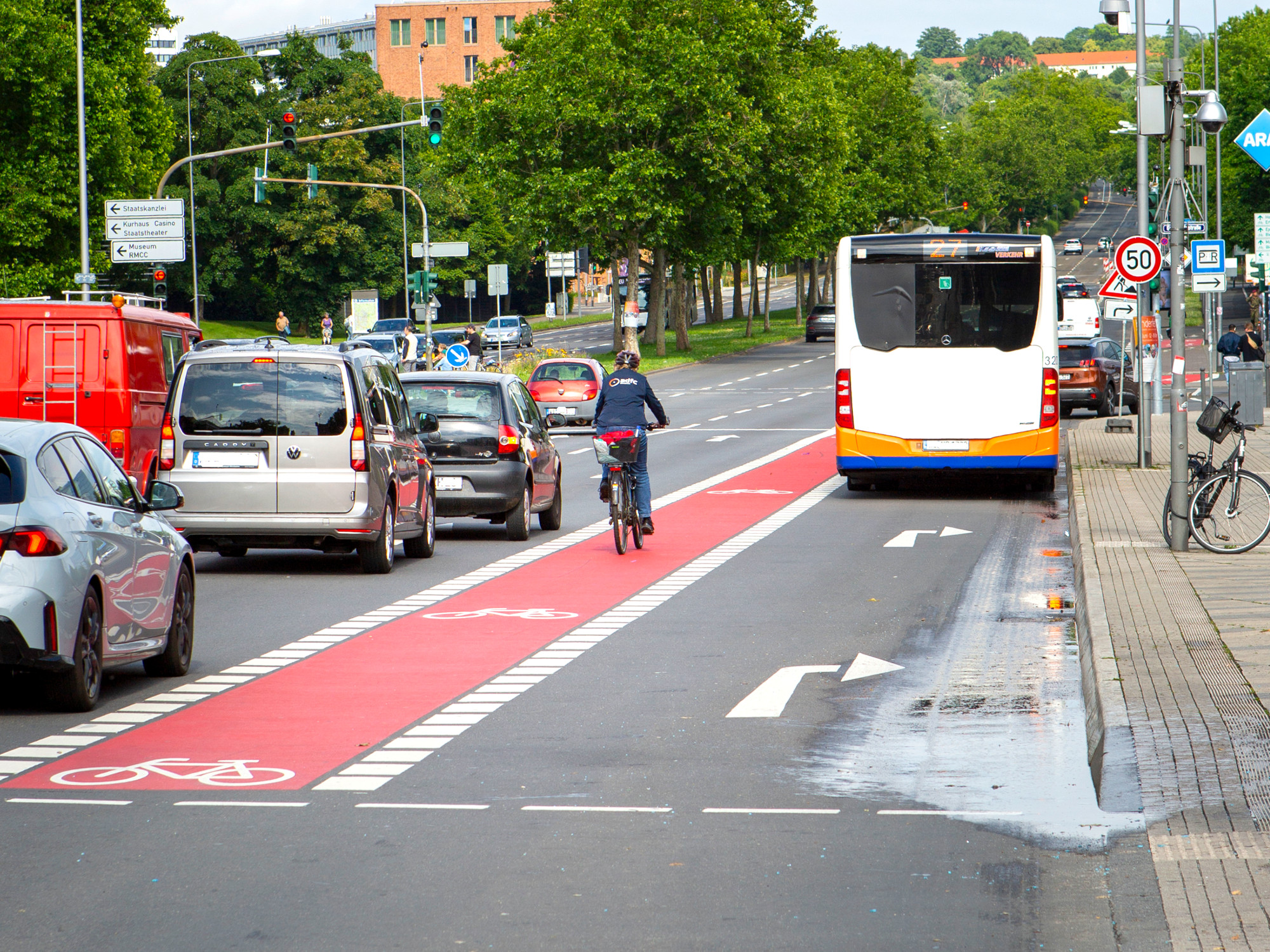
- Bus lane on the right, several car lanes on the left. Directly after the traffic lights, cars and buses have to cross the bicycle lane. © ADFC | Oliver Keßler
Need for action at railway stations – praise for cycle lanes
Two of the most frequently mentioned problem areas in the survey are the main station and the area around Kastel station. Respondents find that Wiesbaden Central Station lacks a well-thought-out concept for directing bicycle traffic well to and around the station. The Mainz-Kastel link point, which is also important for cyclists, is described as a ‘catastrophic cycling situation’, in particular because of the ascent and descent to the Theodor-Heuss-Brücke to Mainz. At the same time, cyclists are pleased with the measures already taken. The new bicycle roads in the city centre are frequently praised: ‘The new bicycle road on Mosbacher Straße is a win-win for cycling. Keep it up!" is one of the many responses in this direction.
Demand for continuous cycle paths and consideration
The desire for an end-to-end network of cycle paths speaks from many comments. Because only a seamless, protected bicycle infrastructure enables safe cycling even for weaker traffic participants. An easy-to-implement measure is speed 30 zones, which are mentioned by cyclists as an important safety aspect. A second major concern is a more peaceful coexistence in the street space. One comment reads: "Communication between all road users is really hardened and incomprehensible. I hope that more will be done here in the future: mutual understanding and consideration.”
-
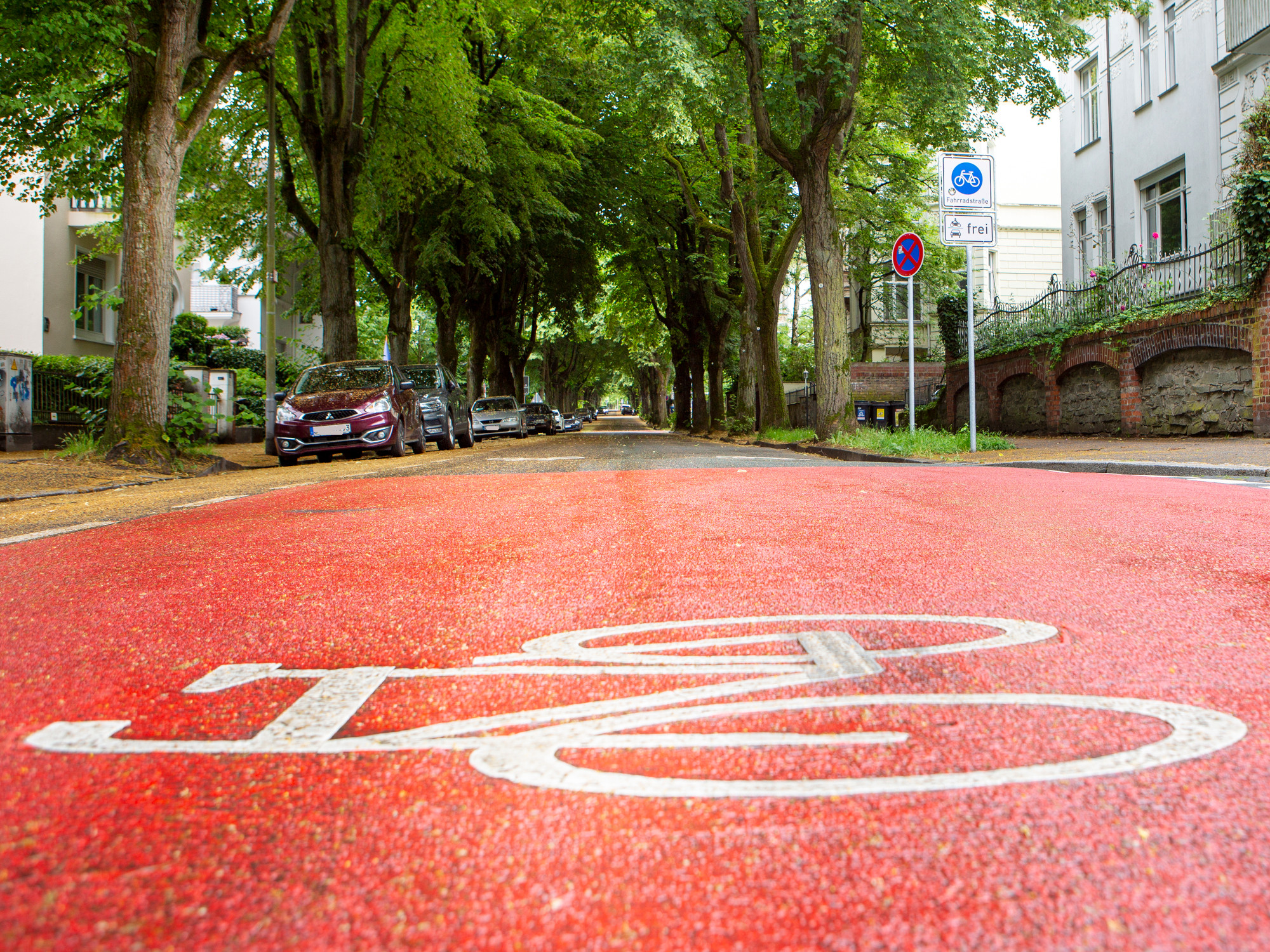
- Mosbacher Strasse is a bicycle road, where cyclists have priority and can travel safely and quickly. © ADFC / Ollo Keßler
-
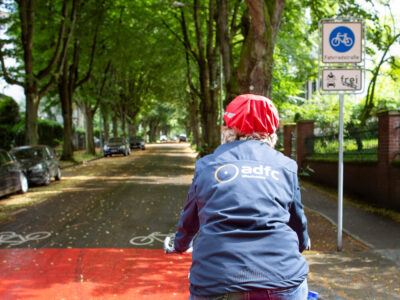
- Wiesbaden, Mosbacher Straße: Cycling is fun here, because it feels safe and you can make good progress! © ADFC / Ollo Keßler
More cycling = less traffic jams
A sustainable transport policy and less congestion for motorists can only be achieved by consistently strengthening cycling. We urgently need more speed in Wiesbaden to expand the bicycle infrastructure. Above all, the city has to work piece by piece on safe and continuous bike connections so that as many people as possible can be mobile by bike in everyday life. Especially at the stations there is an urgent need for action: a modern cycle path guide is intuitively understandable for all involved. It avoids conflicts – and thus accidents – between road users. In addition, we as ADFC urgently want an initiative for more respect and considerate cooperation in road traffic.
Insight into daily cycling practice
‘The bicycle climate test is an important reminder that Wiesbaden must not lose touch with cycling’, the ADFC Wiesbaden is convinced. "We are grateful that 916 Wiesbadeners shared their current experiences in the bicycle climate test", says Michéle Fleckenstein. Especially the many concrete and constructive hints of the cyclists could be valuable for the administration and upcoming planning. "The city has already shown great interest in the results of the survey. This is a great basis for an exchange with the transport department and the cycling office with the aim of further improving the cycling infrastructure", says Fleckenstein. “If we as a city now focus specifically on bicycle mobility, Wiesbaden will certainly be among the proud newcomers in the 2026 ranking.”
-
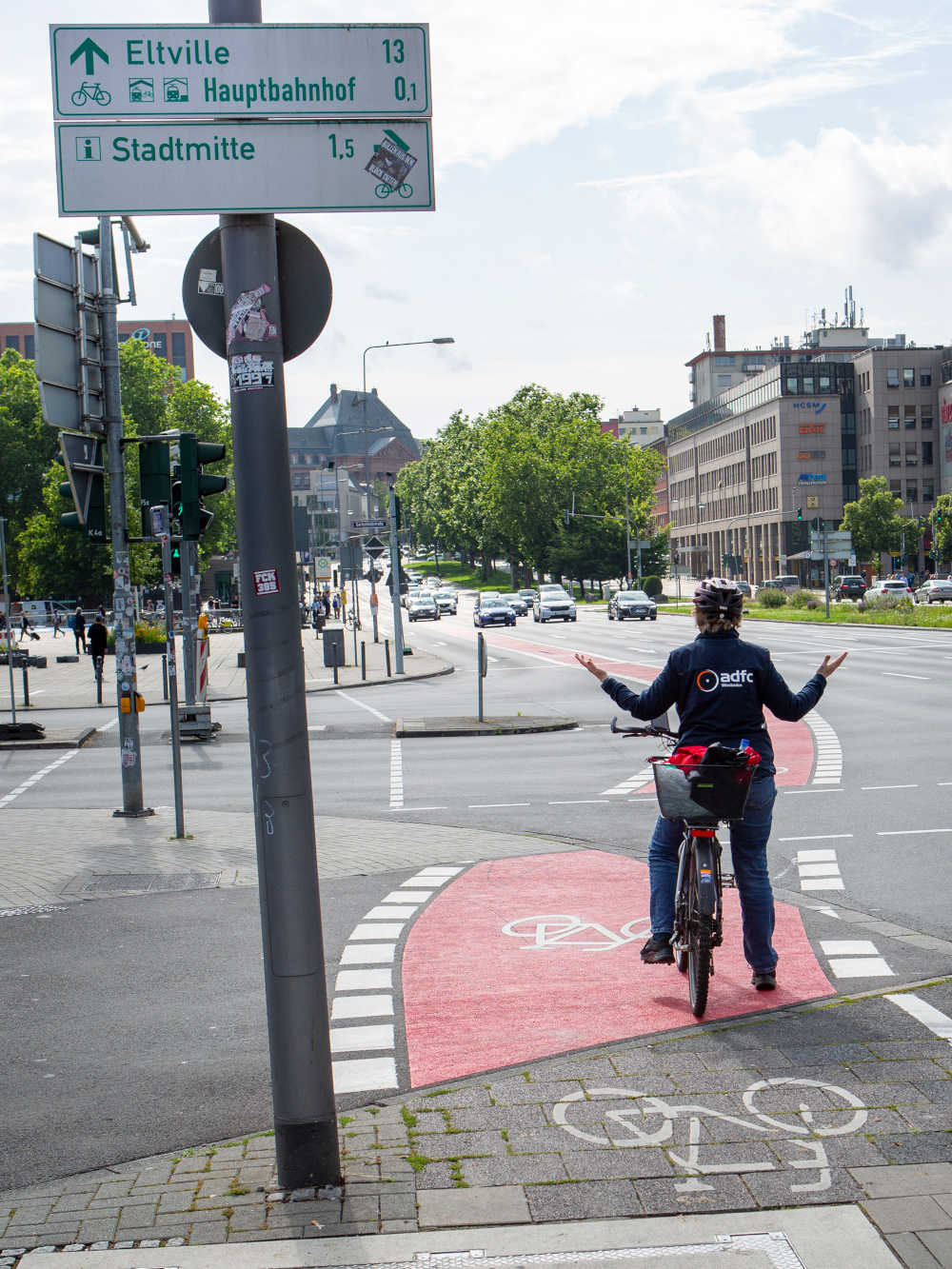
- Where is it going? At the Salzbachstraße junction, there is uncertainty as to where to continue in the direction of the HBF or the city centre. © ADFC | Oliver Keßler
-
- Conflicts are pre-programmed. To get to the station, cyclists have to cross Bahnhofstraße and drive through the Reisingeranlage. © ADFC | Oliver Keßler
Facts and figures about the ADFC cycling climate test
The ADFC cycling climate test is the largest survey on cycling satisfaction in Germany. It is held every two years by the cycling club ADFC with the support of the Federal Ministry of Digital and Transport and took place for the eleventh time in 2024. In order for well-founded results to be achieved, at least 50, 75 or 100 voting results must be available, depending on the size of the city. The survey is open to all, but is aimed specifically at cyclists and is therefore not representative of the population. However, the results of the test are highly informative due to the broad public participation and can help municipalities to improve the offer for cyclists in a targeted manner. More information on the results of the ADFC Bike Climate Test 2024 can be found here:
https://fahrradklima-test.adfc.de
-
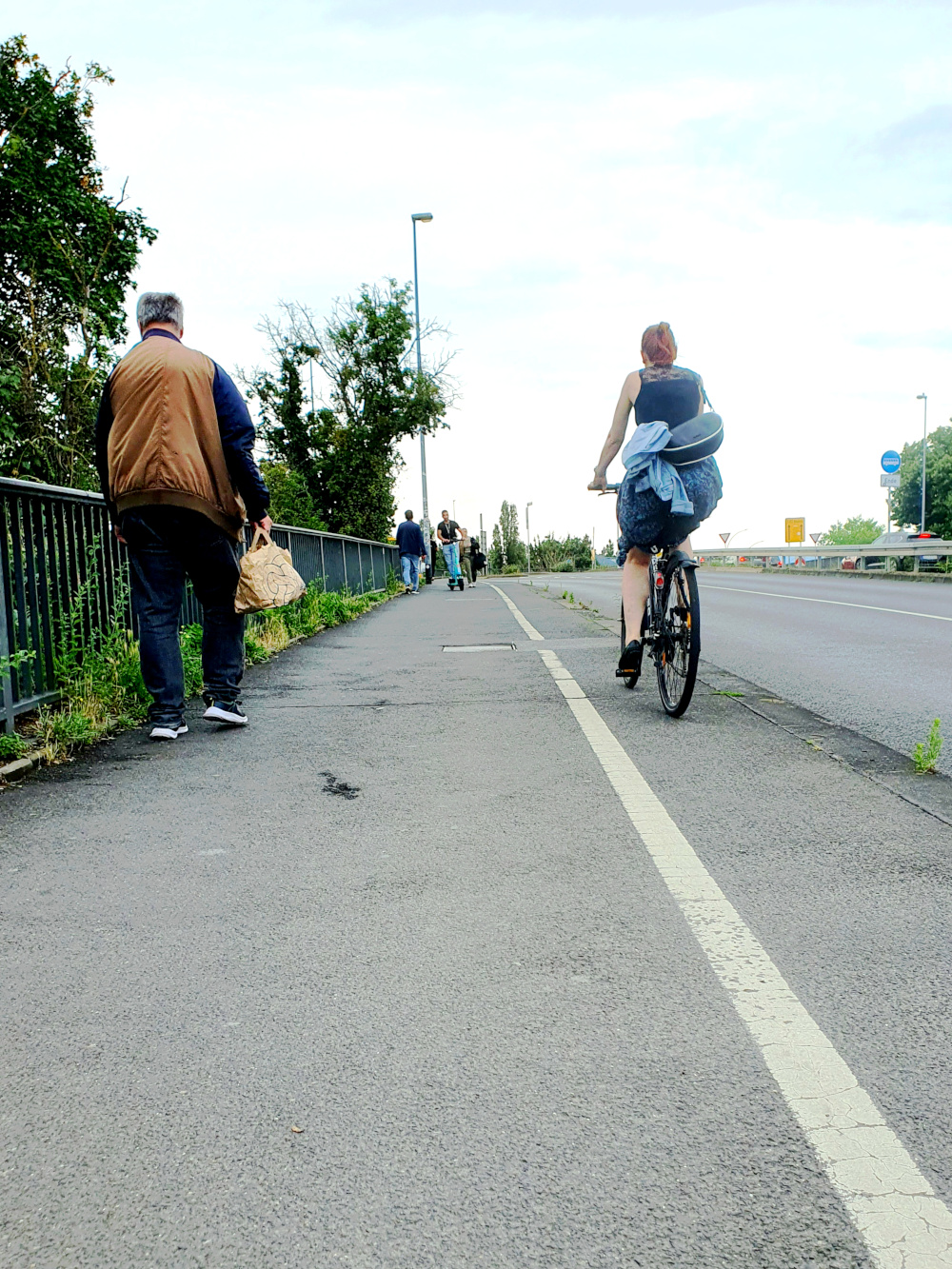
- bottlenecks every minute. The much too narrow cycling strip to the Theodor-Heuss-Brücke is used in two directions by bicycle. © ADFC | Karoline Deißner
-
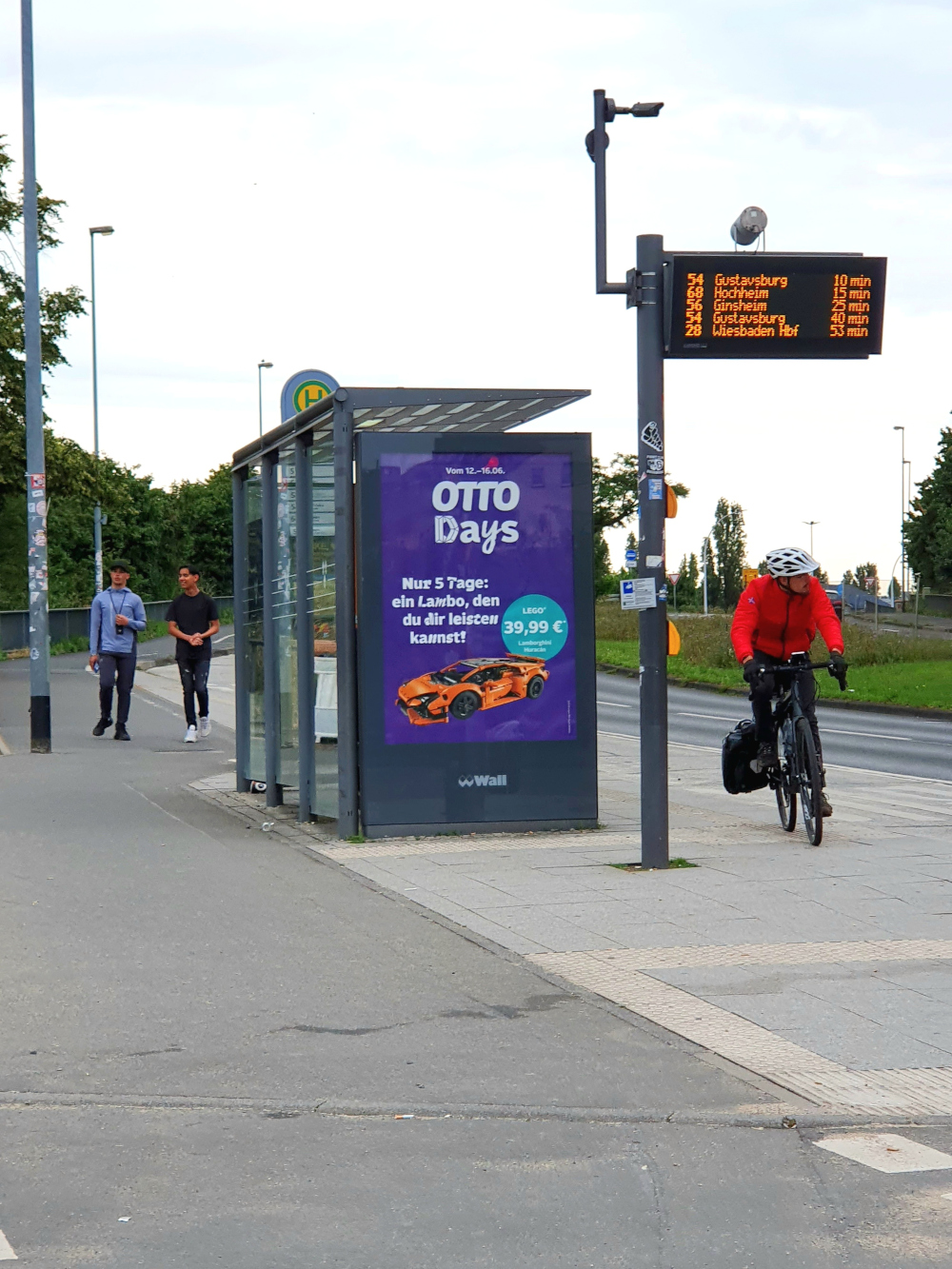
- Dangerous situations arise around the ‘Kastel Bahnhof’ bus stop. For cars, however, two complete lanes are available. © ADFC | Karoline Deißner
-
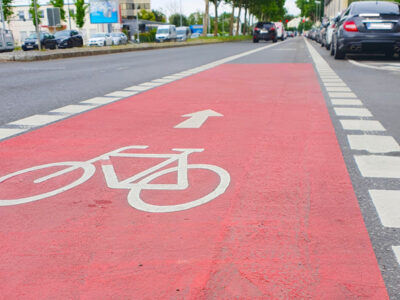
- Kostheim, Hochheimer Straße: Sufficient space for cycling. Children can also travel safely here. © ADFC | Karoline Deißner
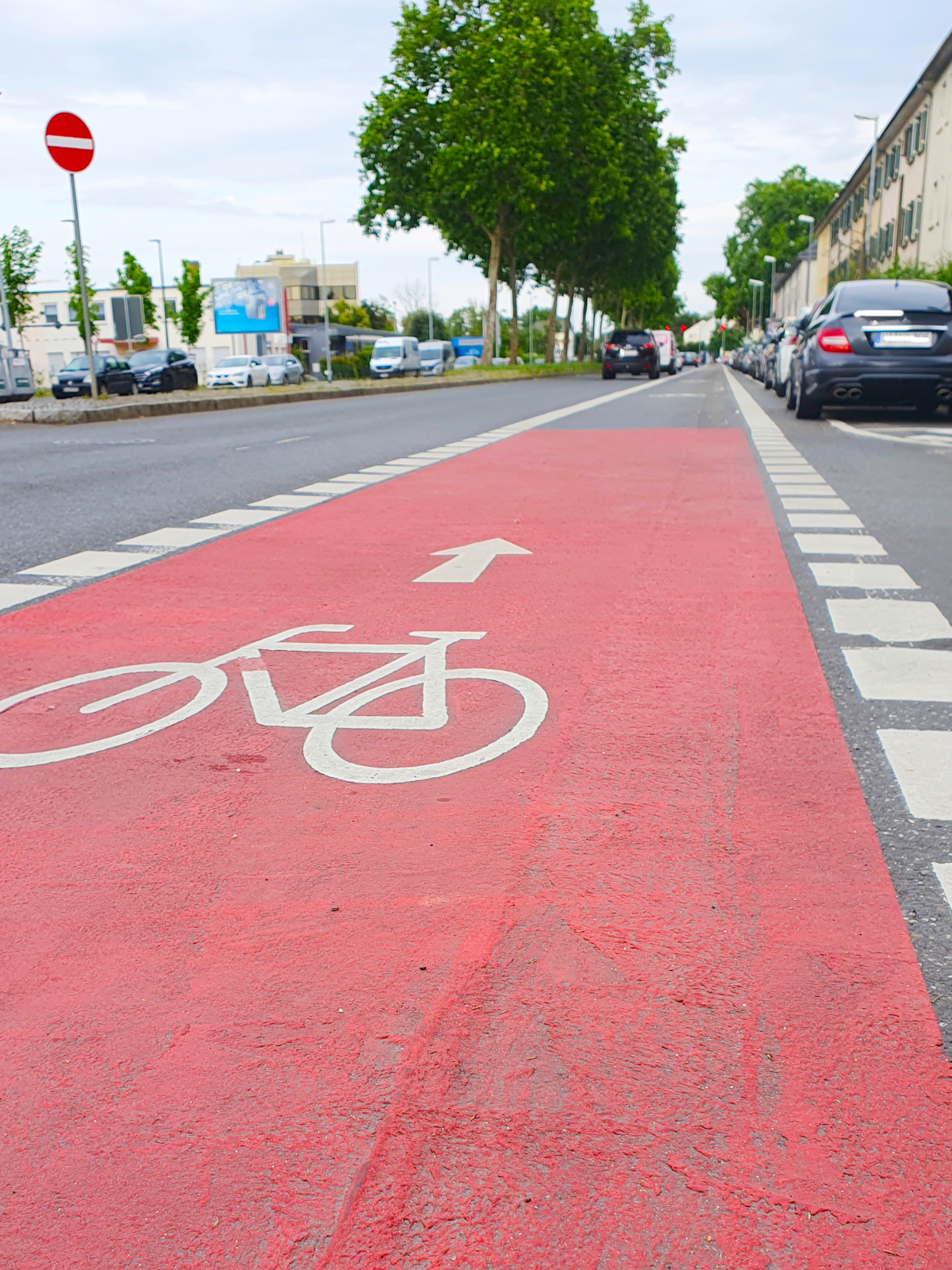
-
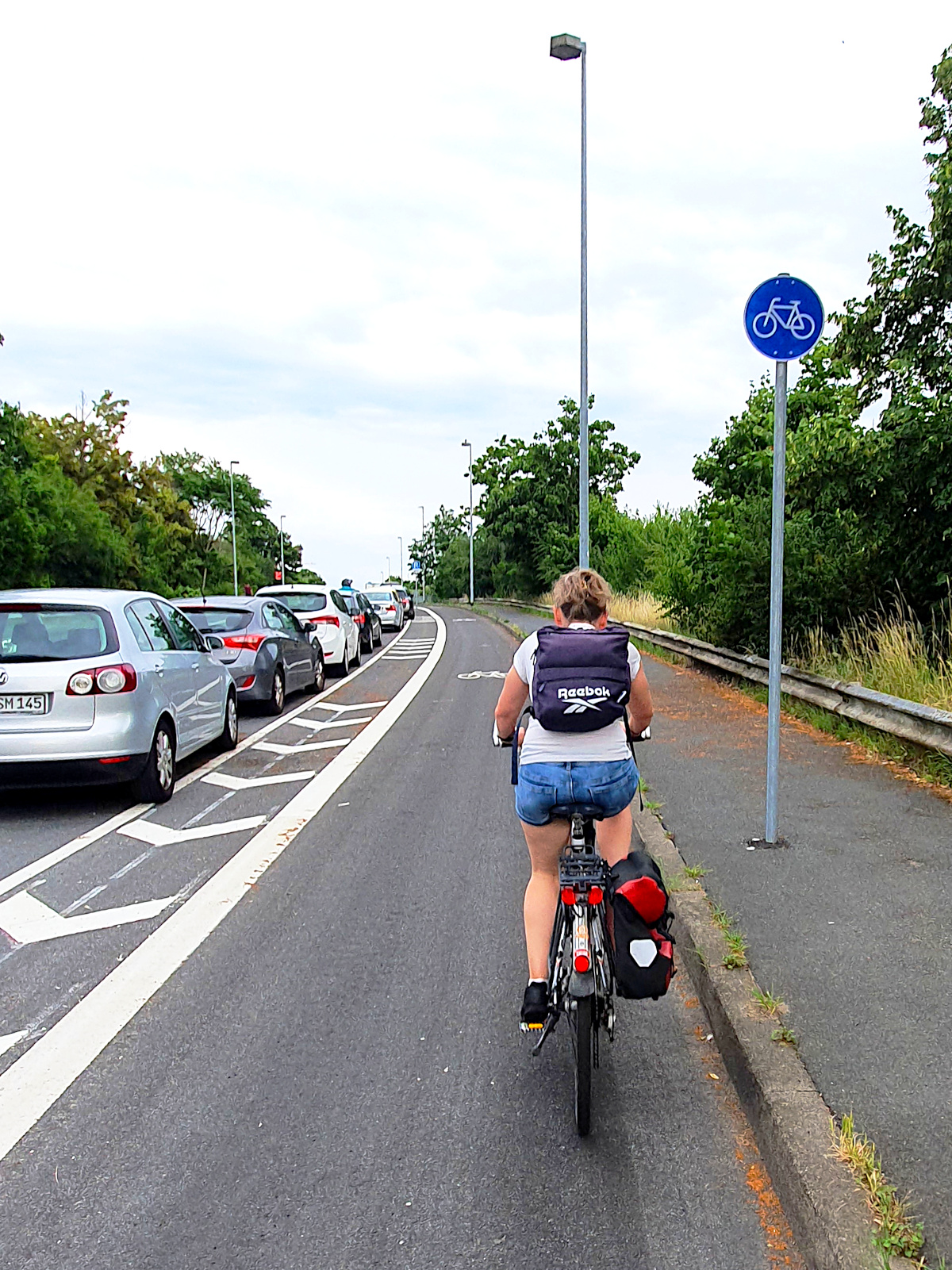
- Kostheimer Landstraße: Just and well divided. Reorganized traffic space on the bridge from Kastel to Kostheim. © ADFC | Karoline Deißner
-
- One of the weak points in Wiesbaden: Cycle paths are often not passed in an orderly manner at construction sites and end abruptly. © ADFC | Karoline Deißner
-
- Such situations especially endanger people with a higher need for safety, e.g. less experienced cyclists or children. © ADFC | Karoline Deißner
 English (US)