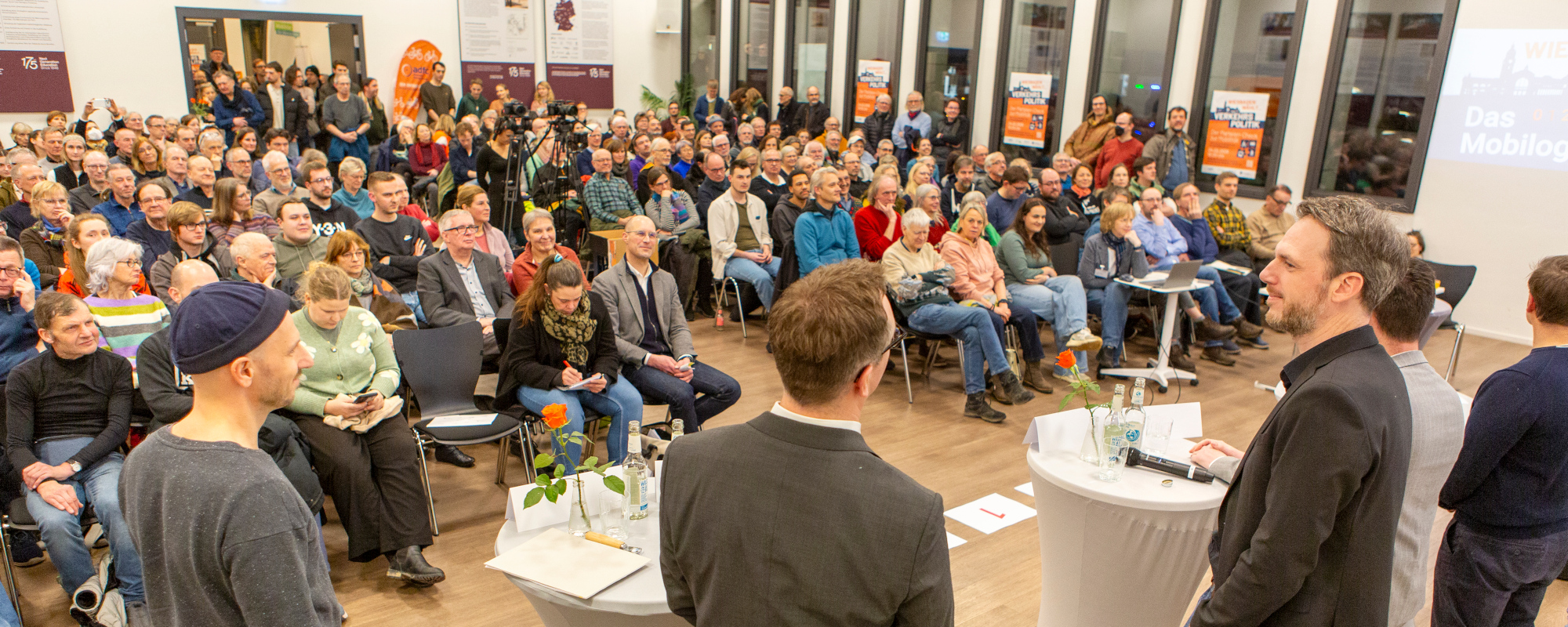
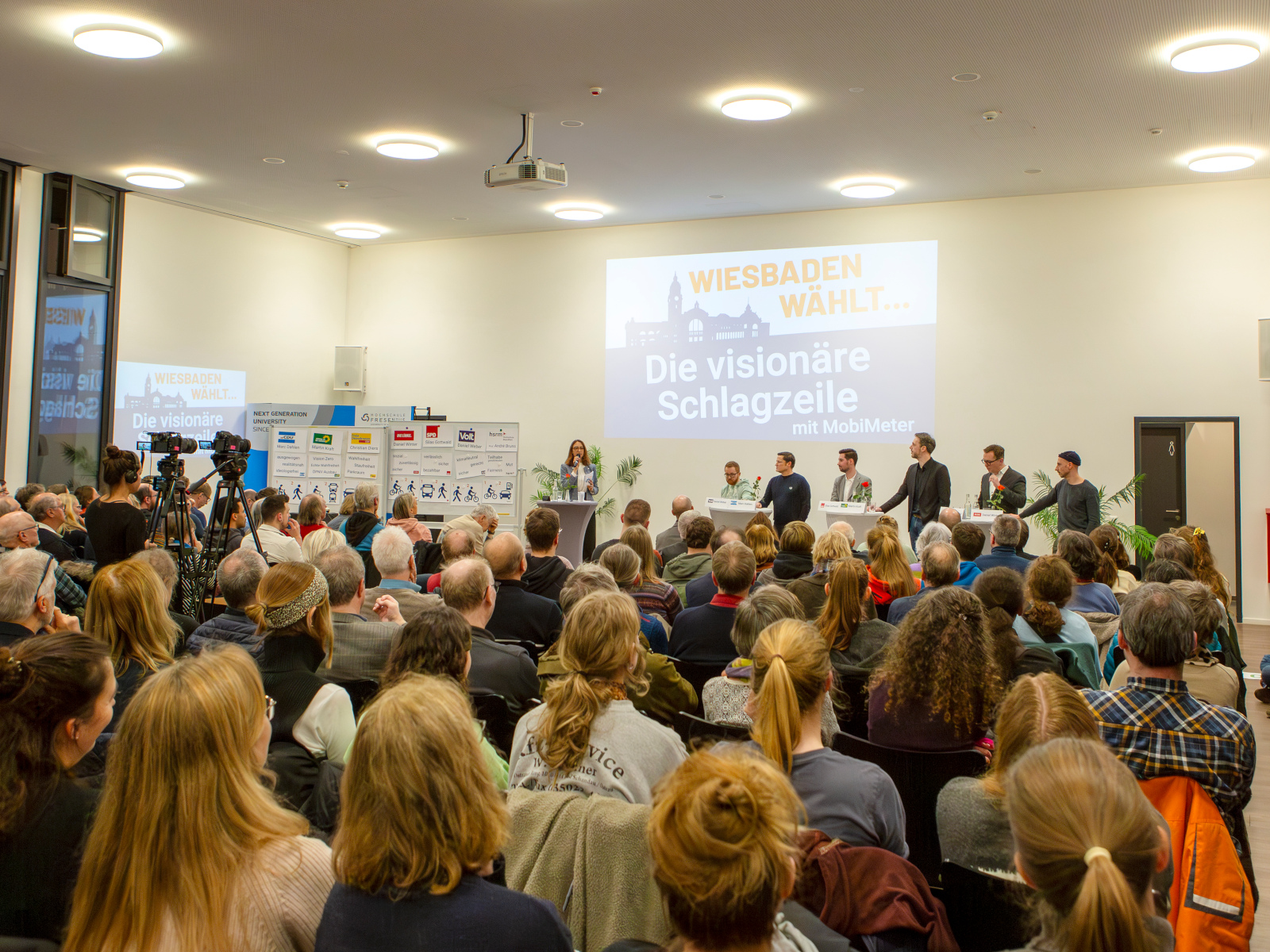
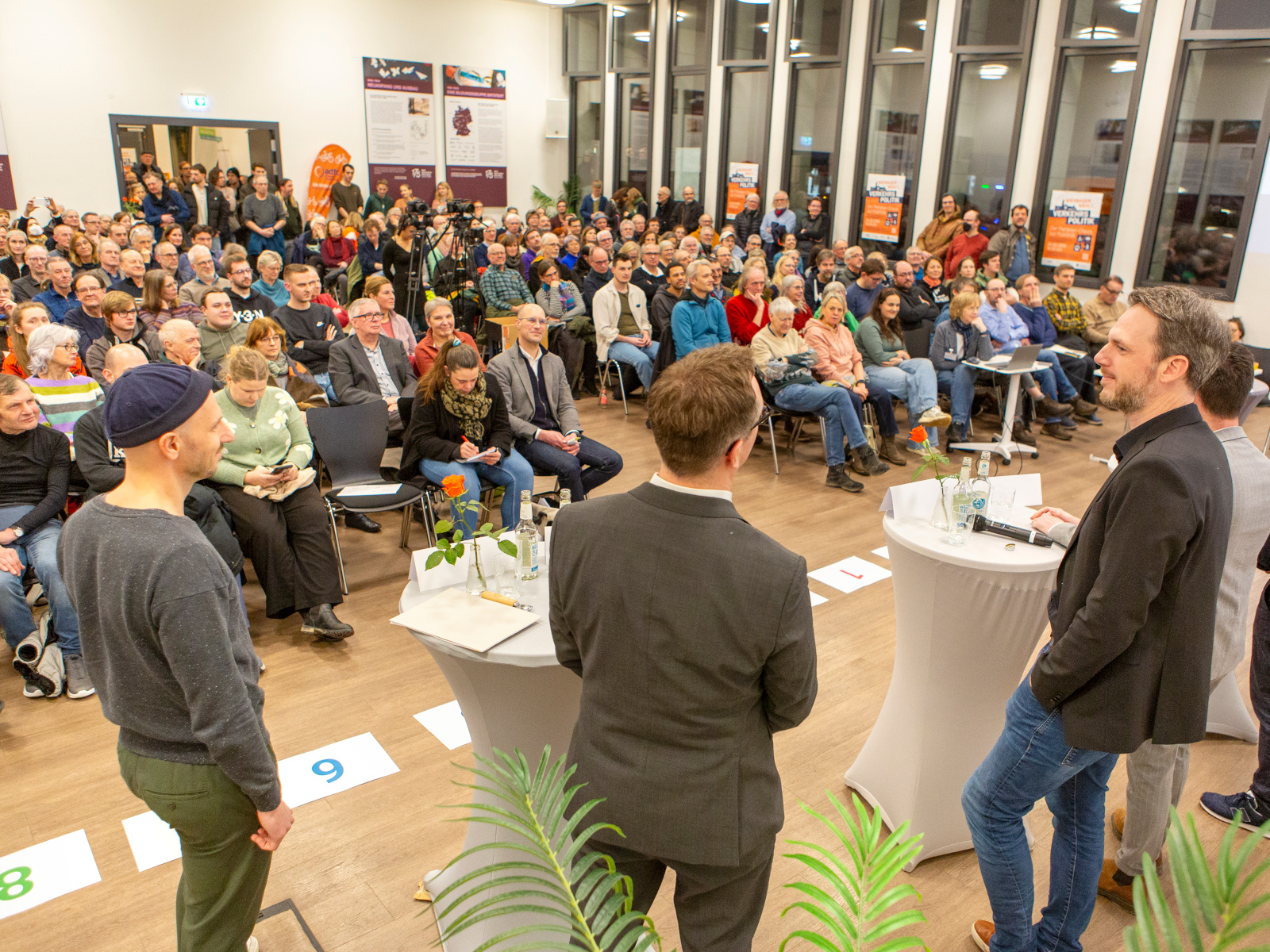
Wiesbaden, 06 February 2026 – Under the title ‘Wiesbaden elects transport policy’, a party check on the local elections took place on 4 February 2026 in the Bürgersaal of the Fresenius University of Applied Sciences. The ADFC Fahrrad-Club Wiesbaden/Rheingau-Taunus had invited together with Wiesbaden neubewegung e.V., FUSS e.V. and the VCD. The event was filled to the last place with almost 200 guests.
Premiere for Wahl-Arena: entertaining and fair
The party check on transport policy was a premiere in Wiesbaden. Instead of a classic panel discussion, the organizers relied on a dynamic format that made political differences visible without polarizing the debate. A decisive success factor: A visible timer ensured that the exchange remained fair and that no party dominated the evening.
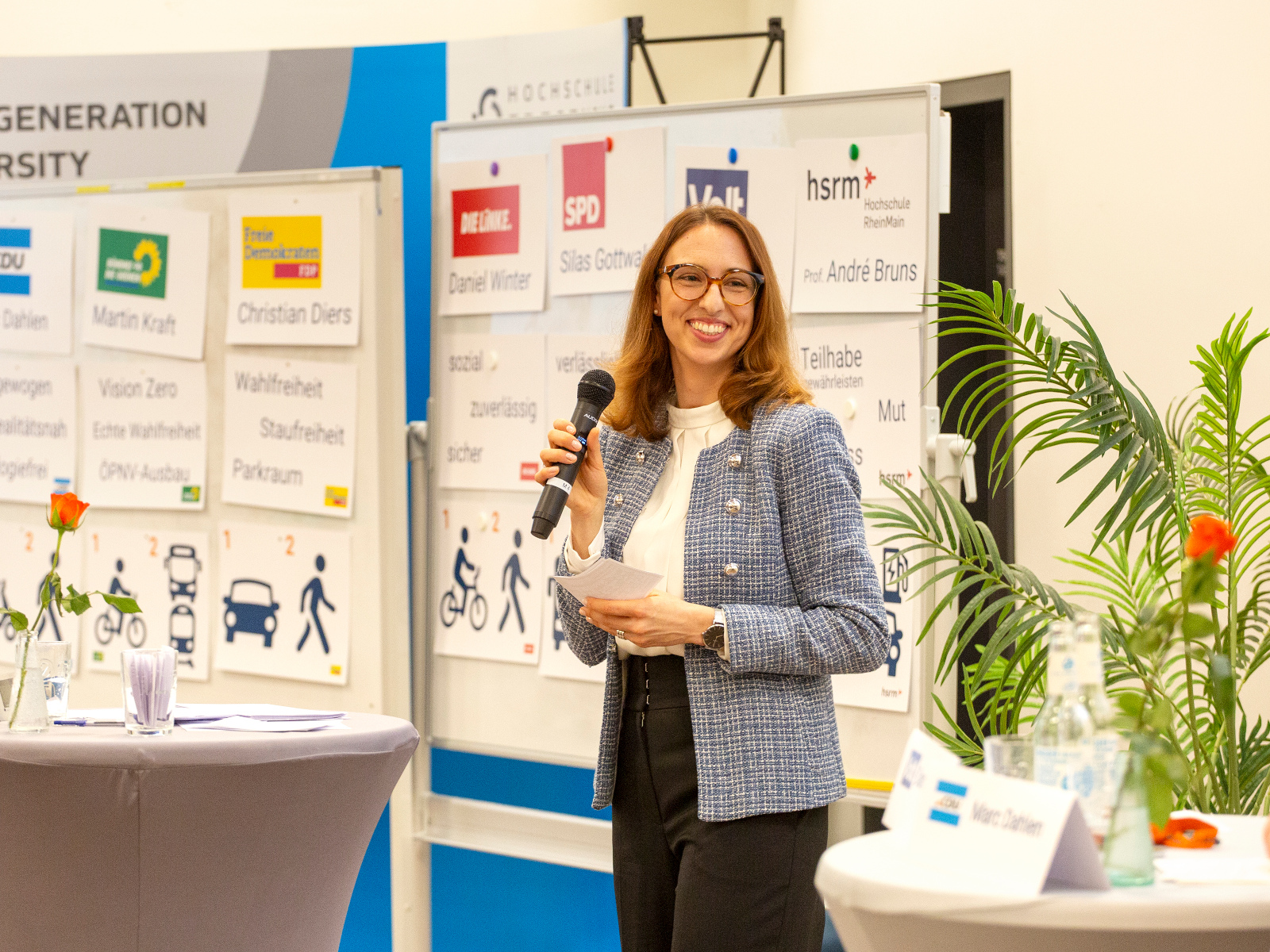
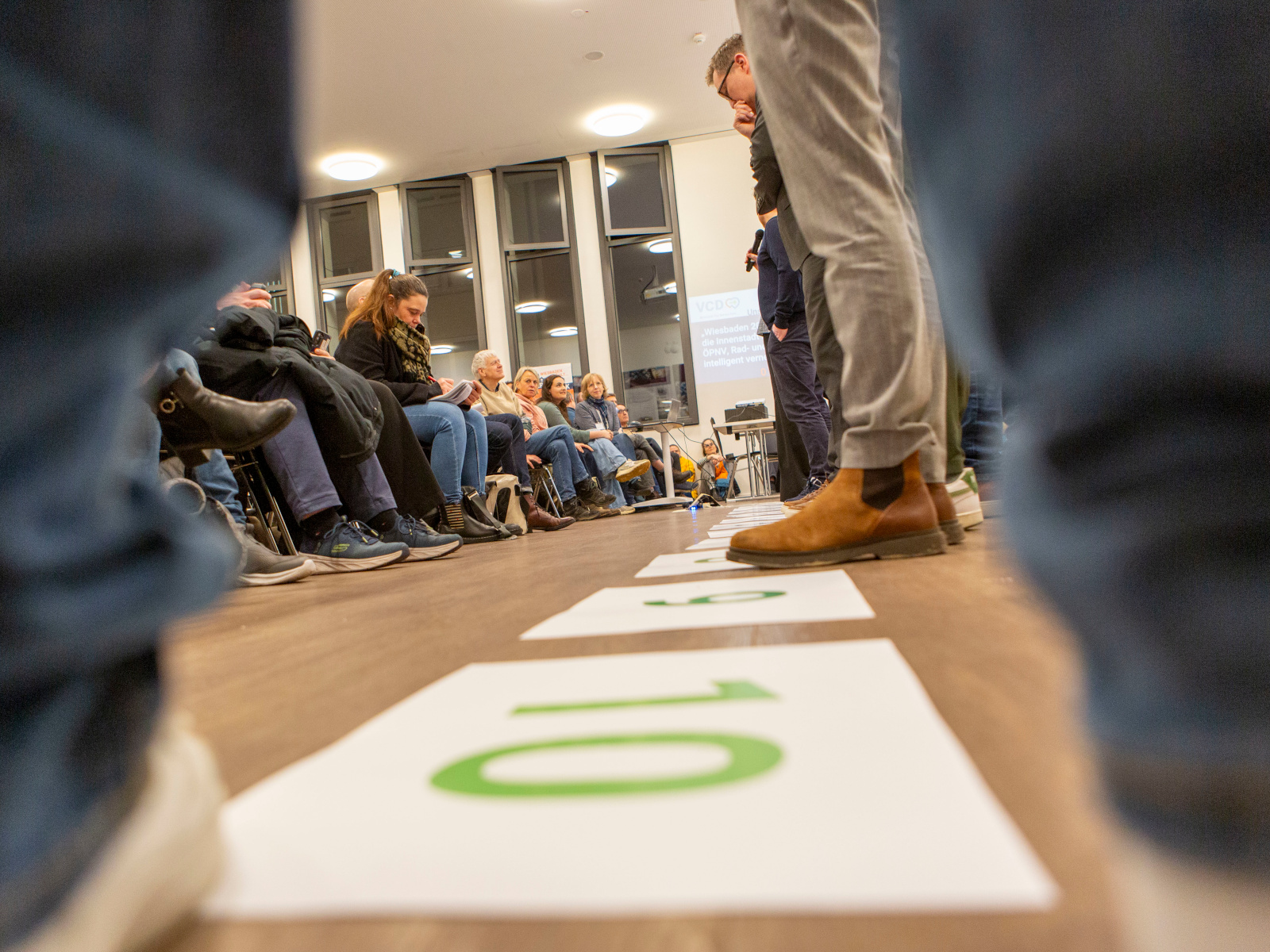
The politicians agreed to the unusual formats. Among other things, there was a ‘moneybag scenario’ in which every politician was allowed to spend €100 million on a single mobility project in 45 seconds, a video player ‘Hotspot Hauptbahnhof’ as a reality check and basis for discussion, and a ‘mobilogram’ in which politicians physically positioned themselves in the room to provocative theses. In addition, the audience at the entrance was able to write down questions to the politicians, which were taken up in the context of a ‘voter:in-letterbox’.
Scientific impulse and strong staff
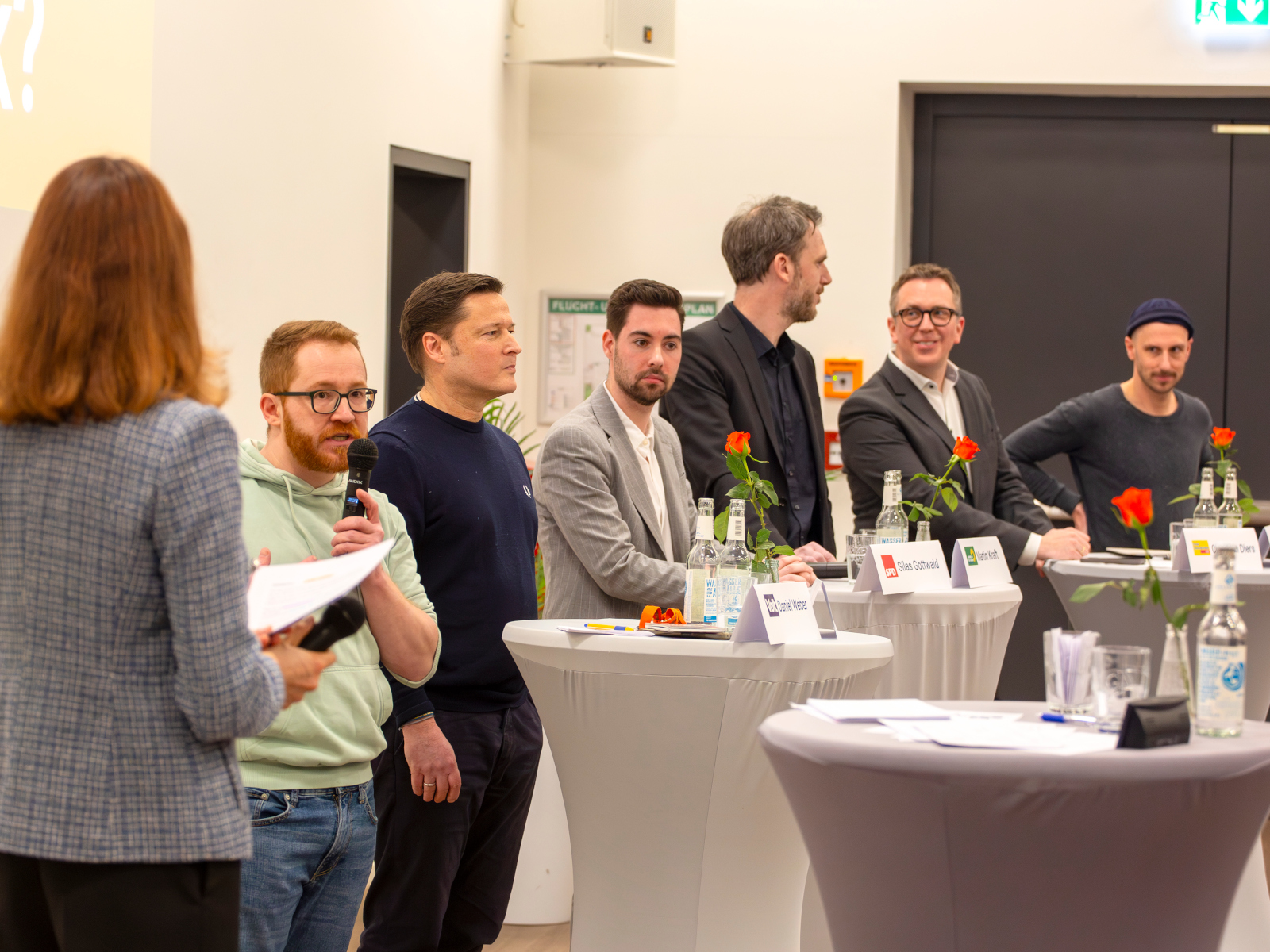
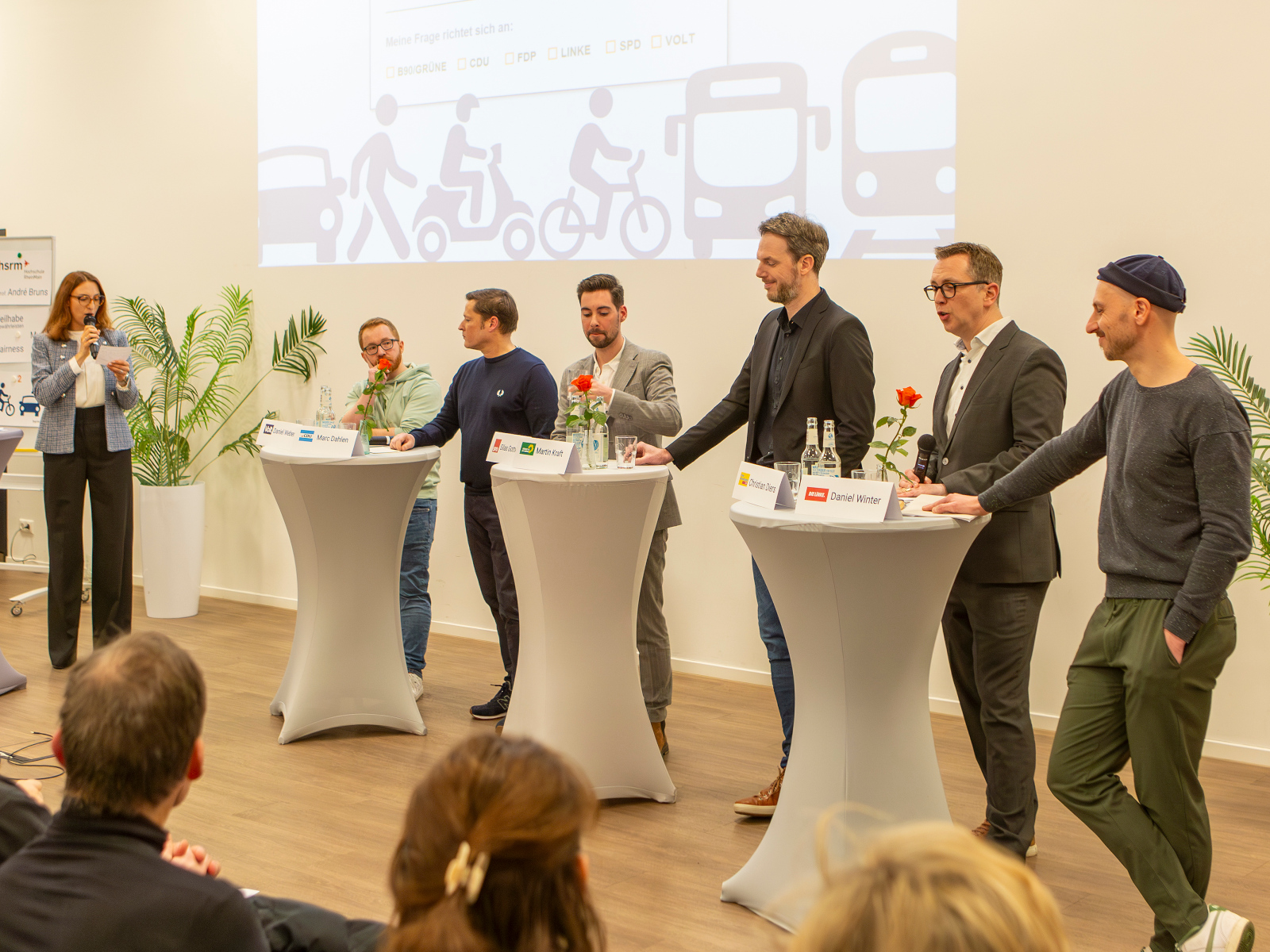
The evening was moderated by Dr. Isabella Buck (ADFC Wiesbaden/Rheingau-Taunus). On the podium were: Marc Dahlen (CDU), Silas Gottwald (SPD), Daniel Weber (Volt), Daniel Winter (Die Linke), Martin Kraft (Bündnis 90/Die Grünen) and Christian Diers (FDP). At the beginning, Prof. Dr.-Ing. André Bruns from the RheinMain University of Applied Sciences gave a short scientific impulse and focused on the question of what constitutes constructive transport policy from a technical point of view.
"Mobility sprint" for fair change
In his final plea, Prof. André Bruns advocated a new ‘Wiesbaden model’ of transport policy: ‘It is important that policymakers not only discuss measures and then believe that they know exactly for whom these measures are good. Instead, it would be important to invest in processes where people talk directly to citizens and businesses in need of mobility", he recommended to politicians. "A fair mobility policy needs formats where you can also get to know the interests of the other side and integrate them into good, sustainable solutions."






 English (US)